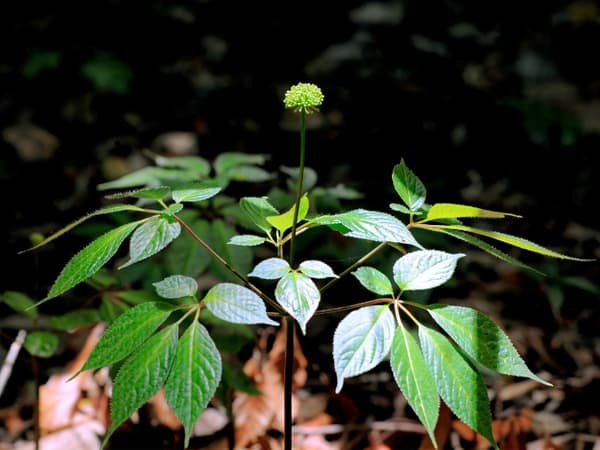
Amidst the majestic Ngoc Linh mountain range, where clouds shroud year-round and primeval forests retain their ancient mystery, there is a plant cherished by the mountain people as a treasure. That is Sâm Ngọc Linh – a precious medicinal herb associated with the old high mountainous region of Nam Trà My, Trà Leng, and areas at the foot of Ngoc Linh mountain. Not only known as a special product of the Central Highlands' forests, Sâm Ngọc Linh also carries a story of nature, indigenous knowledge, and the journey to preserve a rare genetic resource of Vietnam.
From the Ngoc Linh Great Forest to Vietnam's “National Treasure”
The origin of Sâm Ngọc Linh is closely linked to the Ngoc Linh mountain range – an area with high altitude, cool climate year-round, high humidity, and a rich primeval forest ecosystem. This is a special natural environment not found everywhere, allowing the ginseng plant to grow slowly but accumulate high medicinal properties. Therefore, when referring to the origin of Sâm Ngọc Linh, people are not just talking about a medicinal plant, but also about an endemic ecological space of the great forest.
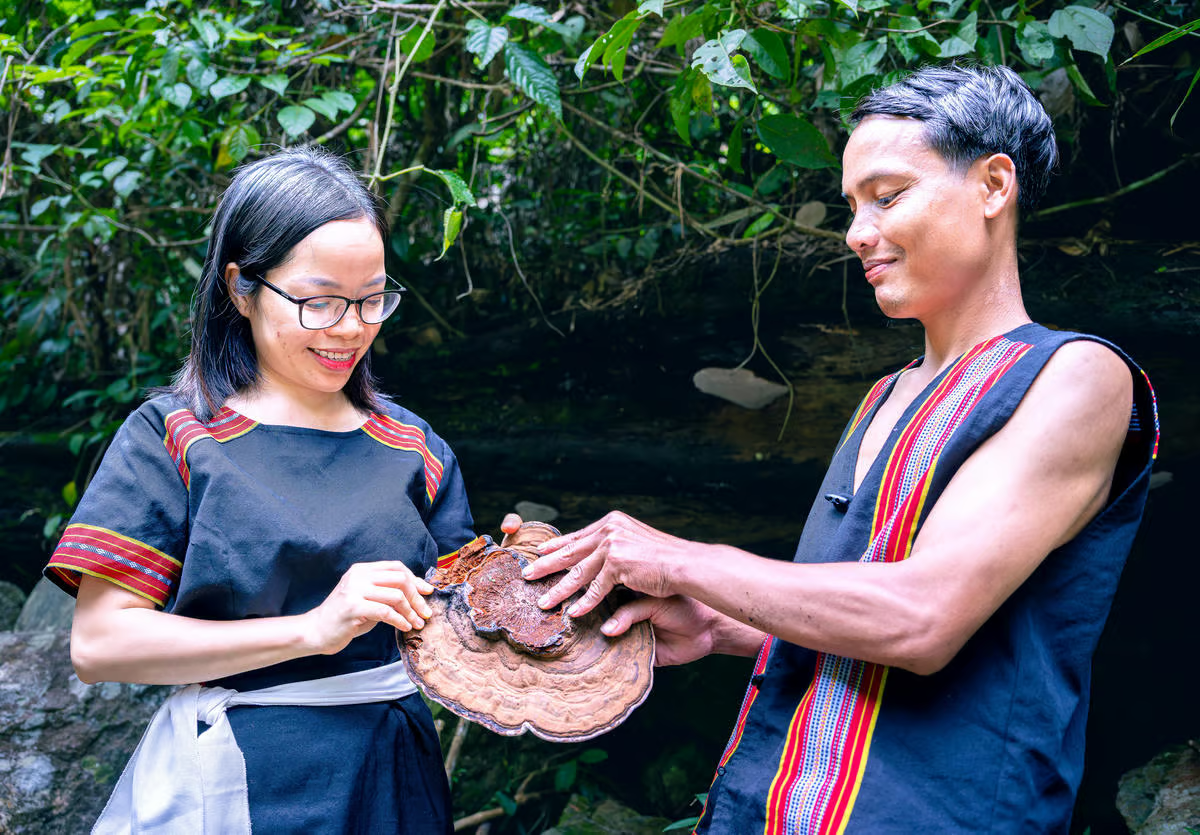
For a long time, the Xơ Đăng people and many other ethnic minority communities living at the foot of Ngoc Linh mountain have known about this plant. In traditional life, ginseng was considered a gift from the forest, often used to boost health, restore physical strength, and support the body after strenuous workdays. Before it was known to scientists, Sâm Ngọc Linh was present in people's lives as part of indigenous knowledge passed down through generations.
A major turning point for this plant came in the late 20th century, when scientists conducted surveys, research, and identified it as an endemic ginseng species of Vietnam. Since then, Sâm Ngọc Linh has gradually become more widely known, not only domestically but also in scientific forums on medicinal herbs. The value of the ginseng plant lies not in its mere rarity, but also in its rich active ingredient composition, opening up many research directions and applications in healthcare.
Why Does Sâm Ngọc Linh Truly “Belong” to the Great Forest?
One of the things that makes the Sâm Ngọc Linh of old Nam Trà My special is its very strict growing conditions. The ginseng plant prefers to live under the canopy of old-growth forests, at high altitudes, where temperatures are low, the soil is rich in humus, water sources are clean, and the ecosystem remains intact. The plant cannot thrive if separated from the characteristic mountainous forest environment of Ngoc Linh. Therefore, talking about Sâm Ngọc Linh is also talking about the story of forest protection, preserving vegetation, and conserving natural habitats.
The close bond between the ginseng plant and the forest also creates a unique development philosophy: to preserve ginseng, one must preserve the forest; to develop ginseng sustainably, one must go hand in hand with ecosystem conservation. This is why current ginseng cultivation areas are often planned under the forest canopy, linked to the conservation and development of indigenous medicinal herbs. For the highland people, ginseng not only has economic value but is also a “forest-preserving plant,” a livelihood linked to the responsibility of preserving natural resources for future generations.
From a cultural perspective, the origin of Sâm Ngọc Linh cannot be separated from community life. From identifying the plant, selecting cultivation areas, caring for it under the forest canopy, to protecting it from weather impacts and pests, all require long-term experience and patience. Because ginseng grows slowly, and the time to accumulate medicinal properties is long, each mature ginseng plant is the result of many years of cultivation, preservation, and waiting.
Today's Story: Conserving a Precious Genetic Resource from Where the Ginseng Plant Originated
Today, when asking where Sâm Ngọc Linh comes from, the answer is not limited to the geographical name Ngoc Linh mountain, but also extends to the story of conservation and development. From a precious plant in the deep forest, Sâm Ngọc Linh is being preserved as an endemic genetic resource with great biological, medical, and economic value. Many mountainous localities have gradually built cultivation areas, developed seedlings, protected the brand, and aimed to form a sustainable value chain for ginseng products.
In areas like Trà Leng, where natural conditions are still close to the traditional growing region of the ginseng plant, the development of medicinal herbs under the forest canopy is opening up a new direction for the mountain economy. Sâm Ngọc Linh is not only a precious medicinal herb but also a symbol of green development potential – where economy is linked to conservation, livelihoods are linked to the forest, and indigenous values are cherished appropriately.
The story of the origin of Sâm Ngọc Linh is therefore also a story of the strong relationship between humans and the great forest. From the high mountain forests, the ginseng plant has entered life as a symbol of vitality, indigenous knowledge, and the aspiration to rise from a difficult land. Amidst today's pace of development, the journey to preserve Sâm Ngọc Linh is not only about conserving a precious medicinal herb but also about preserving a part of the soul of the Central Highlands' mountains and forests.