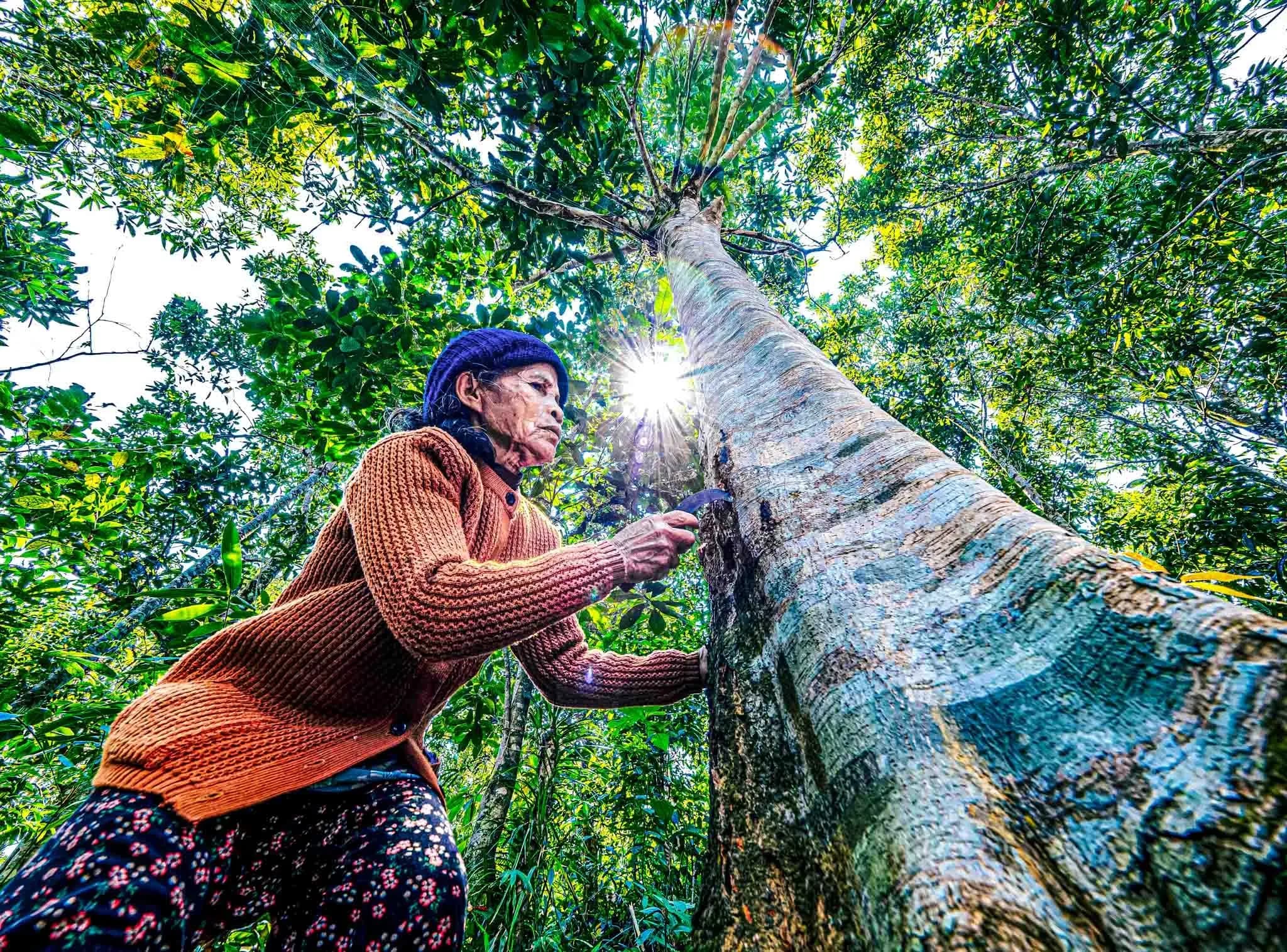
On the high mountain slopes, where the cool climate, suitable humidity, and favorable soil are ideal for cinnamon growth, local people have chosen to develop raw material areas in harmony with nature. This approach helps create stable livelihoods for the community while contributing to preserving the green of the mountains and forests, protecting the living environment, and maintaining the unique ecological identity of the locality.
Quế Trà Leng has long been associated with the lives of the local people. From a familiar plant in home gardens, cinnamon is gradually becoming an important economic resource, opening up new development directions for the highlands. When production is organized systematically, linked with processing and stable consumption, the cinnamon tree brings higher value, creating motivation for people to confidently stick to their land, forests, and develop their economy long-term.
Developing Cinnamon in Conjunction with Forest Ecosystem Protection
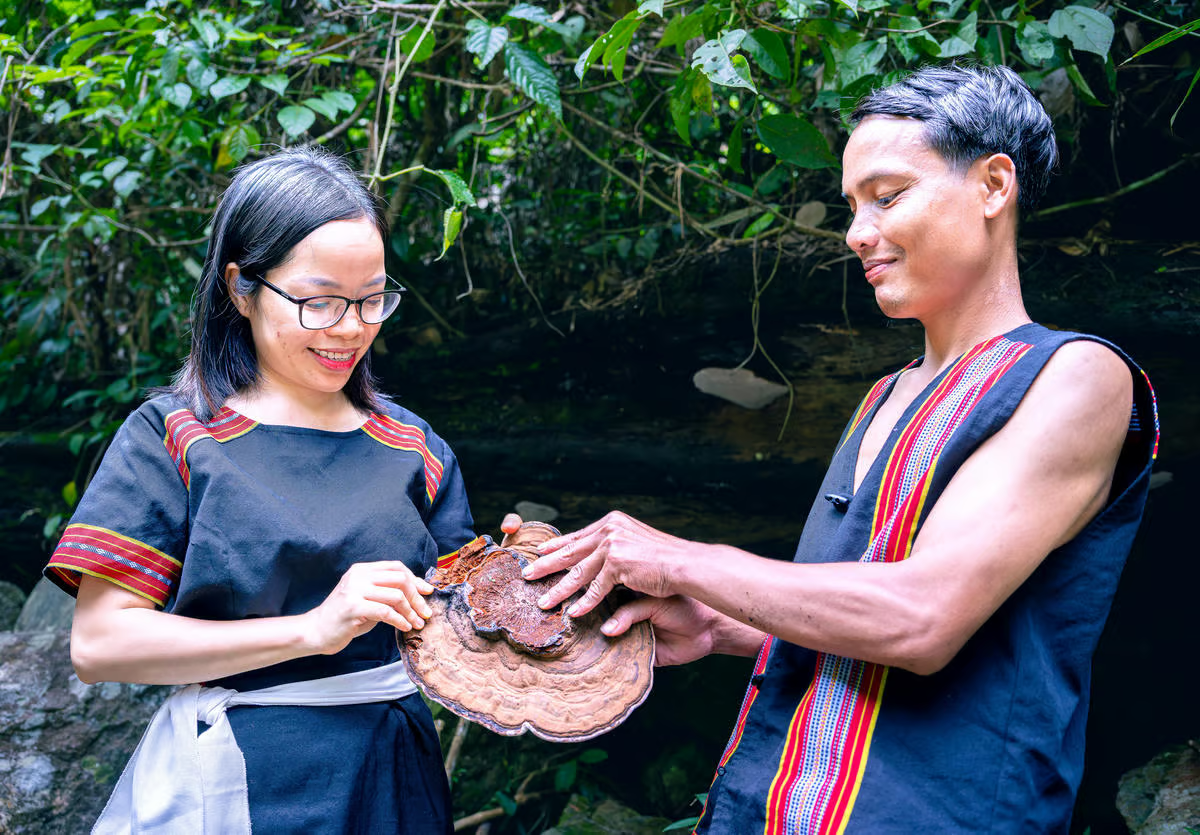
Trà Leng possesses favorable natural conditions for cinnamon to thrive. The hilly terrain, fresh climate, and suitable soil create an ideal environment for cinnamon to grow, accumulate essential oils, and yield stable quality. For generations, the Ca Dong, Xơ Đăng, and Mơ Nông ethnic groups have accumulated experience in selecting, planting, caring for, and harvesting cinnamon in a way that suits the high mountain conditions. These experiences are passed down through daily labor, becoming an important part of the community's indigenous knowledge.
Developing cinnamon under the forest canopy brings many practical benefits to the ecosystem. Cinnamon tree canopies help retain soil, limit erosion on steep slopes, reduce the risk of nutrient leaching during the rainy season, and help maintain soil moisture. When cinnamon cultivation areas are expanded sustainably, forest cover is maintained, and natural water sources are better protected. This is a significant factor for the lives of mountain people, where water, land, and forests are closely linked to production and daily life.
The forest is also home to many native flora and fauna. When people focus on planting cinnamon in an environmentally friendly way, the forest ecosystem has better conditions to recover and develop. This shows that the cinnamon tree not only has economic value but also contributes to maintaining ecological balance, creating a foundation for sustainable development in Trà Leng.
For local people, the forest is always a valuable asset linked to their lives. From forest products, water sources to the ecological environment, all directly affect the community's livelihoods. Therefore, cinnamon development always goes hand in hand with the awareness of preserving the forest, viewing the forest as the foundation for building a stable, long-term, and safe economy for future generations.
Enhancing the Economic Value of Native Cinnamon
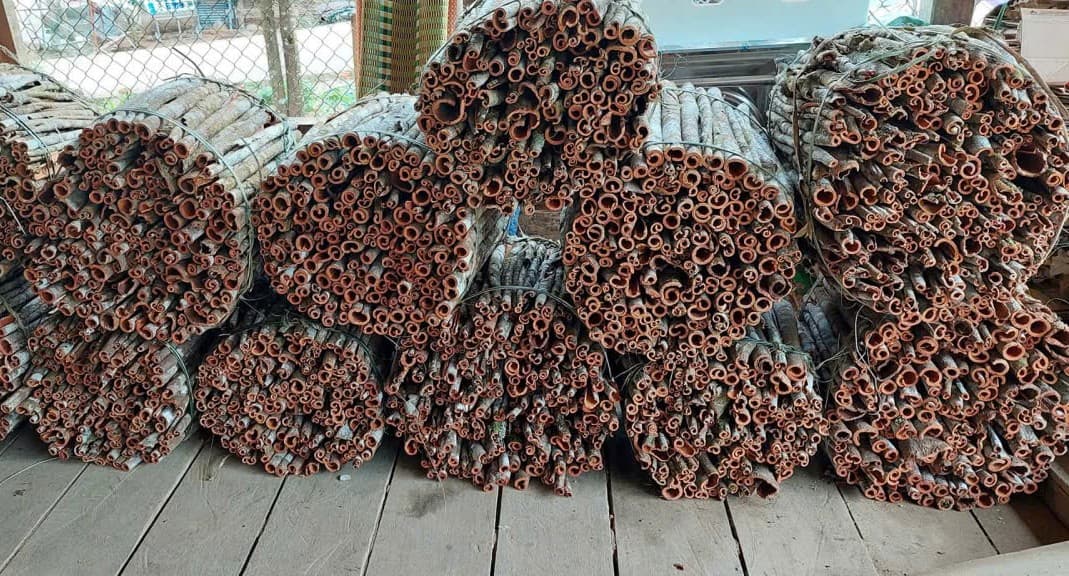
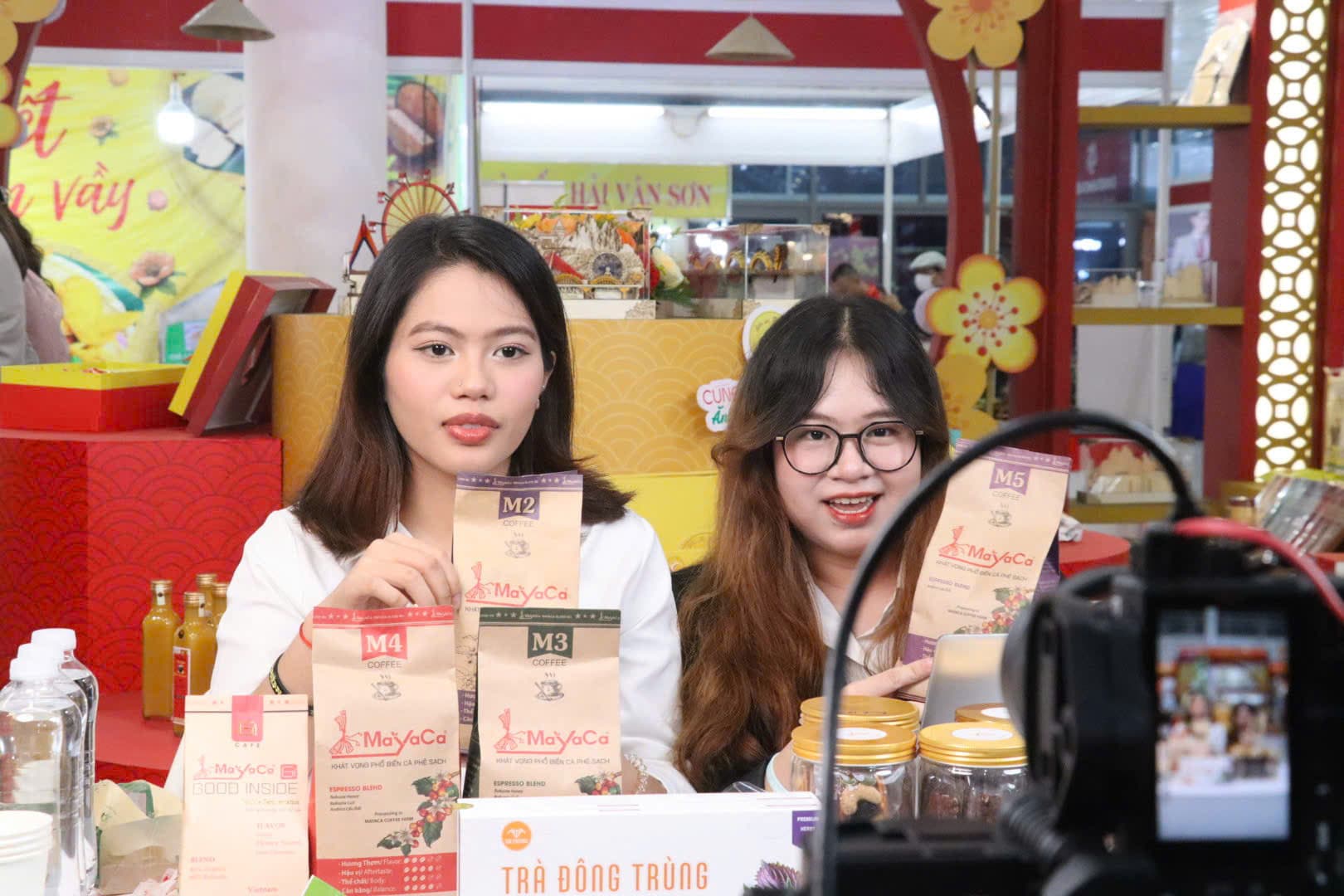
Quế Trà Leng has long been known for its distinctive aroma, natural spiciness, and high essential oil content. These characteristics create a unique advantage for local cinnamon products in the market. From native raw materials, many products have been formed and brought to market, such as cinnamon sticks, cinnamon quills, cinnamon powder, cinnamon essential oil, cinnamon tea, and OCOP products bearing the highland imprint.
Product diversification helps increase the value of the cinnamon tree, while expanding development opportunities for local people. If cinnamon was previously mainly sold as raw material, now cinnamon growers are gradually participating more deeply in the value chain. From harvesting and preliminary processing to manufacturing and product introduction, each stage creates more jobs and increases income for local people. This is an important step, helping household economies gain more resources to improve their lives.
The development of processed cinnamon products also contributes to building the Trà Leng brand. When products have a unique identity, stable quality, and are well-received by the market, the value of the raw material area also increases. This encourages people to expand cinnamon cultivation areas according to planning, care for crops more carefully, and focus on quality standards from the outset.
In addition, cinnamon also opens up opportunities for developing household economic models, cooperative economies, and production linkages. When people participate together in the value chain, product consumption becomes more convenient, reducing output risks and increasing market competitiveness. This is a direction consistent with the goal of sustainable agricultural development, effective exploitation of indigenous resources, and enhancing the vitality of the mountain economy.
Green Economy Opens Up Sustainable Development Opportunities for Trà Leng
In the current development trend, the green economy is becoming a direction of interest for many localities. For Trà Leng, the cinnamon tree is one of the important foundations to realize this goal. The cinnamon development model associated with forest protection, soil and water conservation, and enhancing product value is creating a direction suitable for the natural conditions, culture, and livelihoods of the local community.
The green economy in Trà Leng does not stop at environmentally friendly planting. It is also a process of organizing rational production, using resources sparingly, reducing negative impacts on nature, and creating economic value from the inherent advantages of the mountainous region. The cinnamon tree, with its good adaptability and high utility value, is becoming one of the clearest symbols of an economic approach linked to resource conservation.
Besides its economic value, the cinnamon forests also contribute to creating a distinctive landscape for Trà Leng. The green of cinnamon stretching across the mountain slopes, the fragrance spreading through the air, and the rhythm of people's labor create a vibrant, culturally rich picture. From there, the locality has more potential for developing ecotourism, experiential tourism, and community-based tourism. Visitors to Trà Leng can learn about the cinnamon cultivation process, visit the raw material areas, feel the scent of cinnamon in the vast mountains, and explore the cultural life of the indigenous people.
In the future, if there is synchronous investment in infrastructure, processing, and promotion, Quế Trà Leng can become a typical product of the highland green economy. When people have stable incomes, actively protect forests, and preserve the living environment, the goal of sustainable development will have a stronger foundation. Quế Trà Leng today therefore carries more meaning than just a crop. It is a symbol of the connection between humans and nature, a testament to an economic development direction based on indigenous resources, and also a driving force for Trà Leng to gradually build a green, sustainable economy, preserving the green of the mountains and forests for future generations.