Amidst the undulating mountains of Trà Leng, where white clouds still linger around small houses and the sound of streams echoes day and night through the vast forest. After the losses and sorrows left by natural disasters, the people here still resiliently cling to their land and forest to rebuild their lives. And amidst that immense green, the cinnamon tree has become a symbol of hope, a silent source of life nurturing countless families.
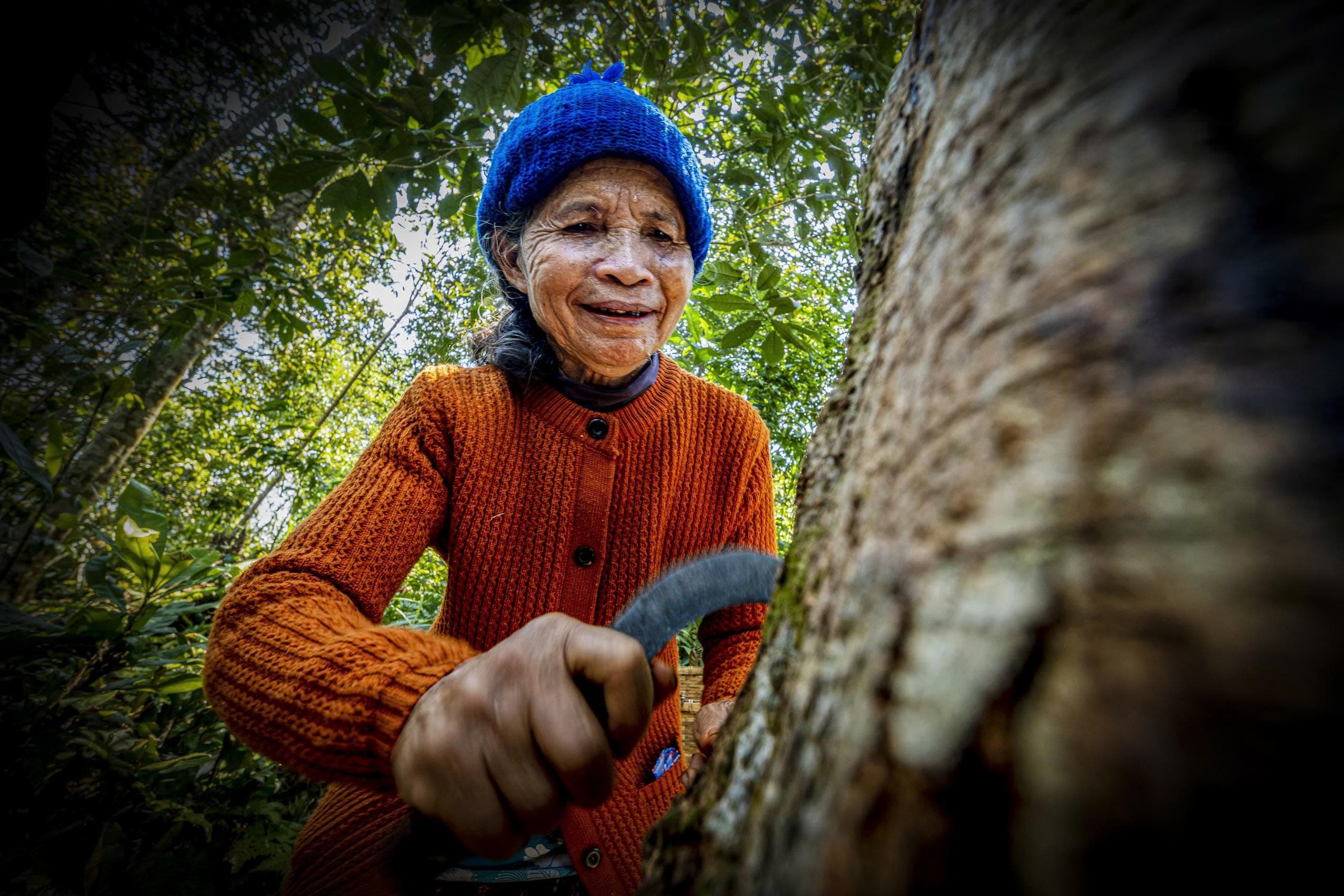
From early morning, even before the sun has risen above the mountain peaks, the villagers quietly carry their baskets and knives into the cinnamon forest. The winding dirt road leads through hills covered in a fragrant green. The calloused hands of elderly women still skillfully peel layers of cinnamon bark from the tree trunks. For them, the cinnamon tree is not just a livelihood but also a memory of generations, a gift that the mountains of Trà Leng generously bestow.
There are elderly people, over seventy years old, still diligently working beside large cinnamon trees. The deep wrinkles on their weathered faces seem to recount years of living with the mountains and forests. As each roll of cinnamon bark is peeled, a pungent, spicy aroma spreads through the quiet expanse of the great forest. This scent of cinnamon has been intertwined with the childhoods of many Trà Leng children, entering every meal, every small kitchen, every cold rainy season in the highlands.
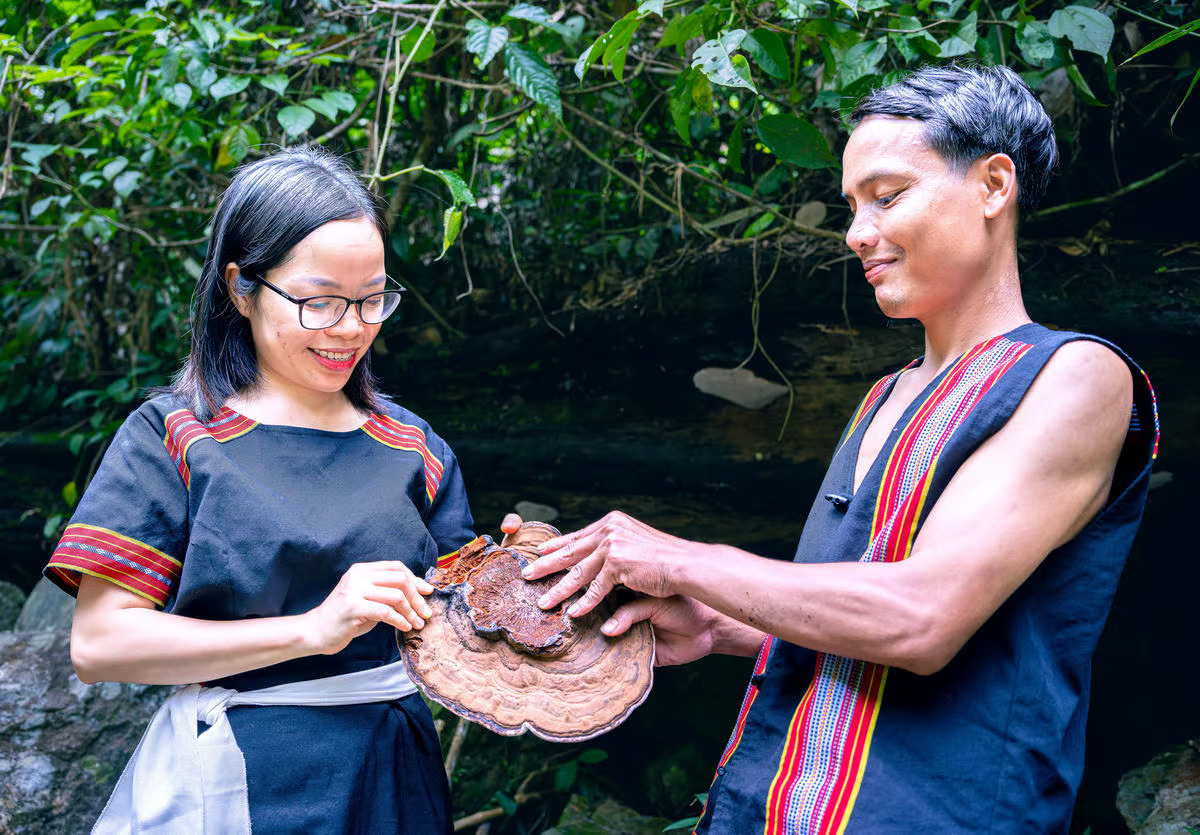
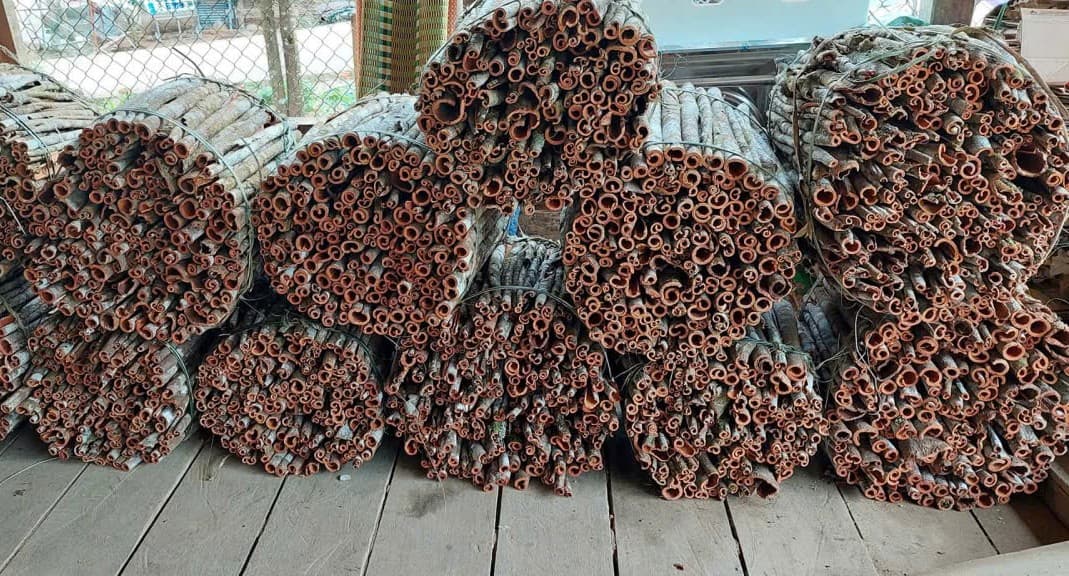
Thanks to the cinnamon tree, the Ca Dong and Mơ Nông people here have overcome their most difficult days. Previously, their lives primarily depended on swidden farming in the forest; a good harvest meant plenty, a bad harvest meant hunger. But the cinnamon tree has brought a more sustainable direction. Cinnamon bark is sold to traders for spices, medicinal ingredients, and essential oil production. Cinnamon leaves are distilled into high-value essential oil, which helps keep the body warm, supports health, and repels insects. Cinnamon wood is used for handicrafts, while small branches and cinnamon scraps are also utilized for incense or fuel. Almost no part of the cinnamon tree is wasted.
Thanks to the cinnamon tree, many families in Trà Leng have increased their income. Today's lush green cinnamon hills are not only an economic asset but also a symbol of revival in a land that has suffered much from natural disasters. The people understand that preserving the cinnamon forest is also preserving the land, preserving water sources, and preserving peace for the village.
The most special thing about Trà Leng is not just the rich aroma of cinnamon, but also the resilience of its people. Despite many hardships, the villagers live sincerely and persistently, just like the cinnamon roots deeply embedded in the earth. Seeing a small woman carrying a bundle of cinnamon on her shoulder under the scorching mountain sun, one truly appreciates the value of each cinnamon stick that reaches the consumer. It is not merely a product from nature, but also the crystallization of sweat, patience, and love for the mountains and forests.