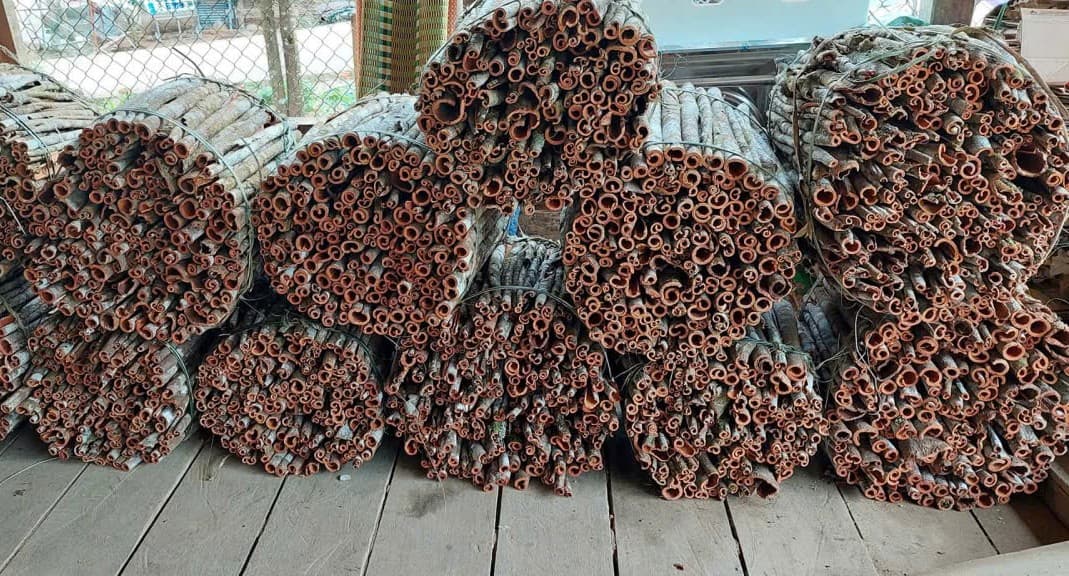
There is a strong, warm fragrance that always lingers in every home, every slope in the land of Trà Leng. That cinnamon scent is not only the breath of the mountains and forests, but also the soul, the livelihood closely associated with the lives of the people for generations. Images of traditional cinnamon making have depicted a realistic, moving picture of the hardships and aspirations for change of the local people.
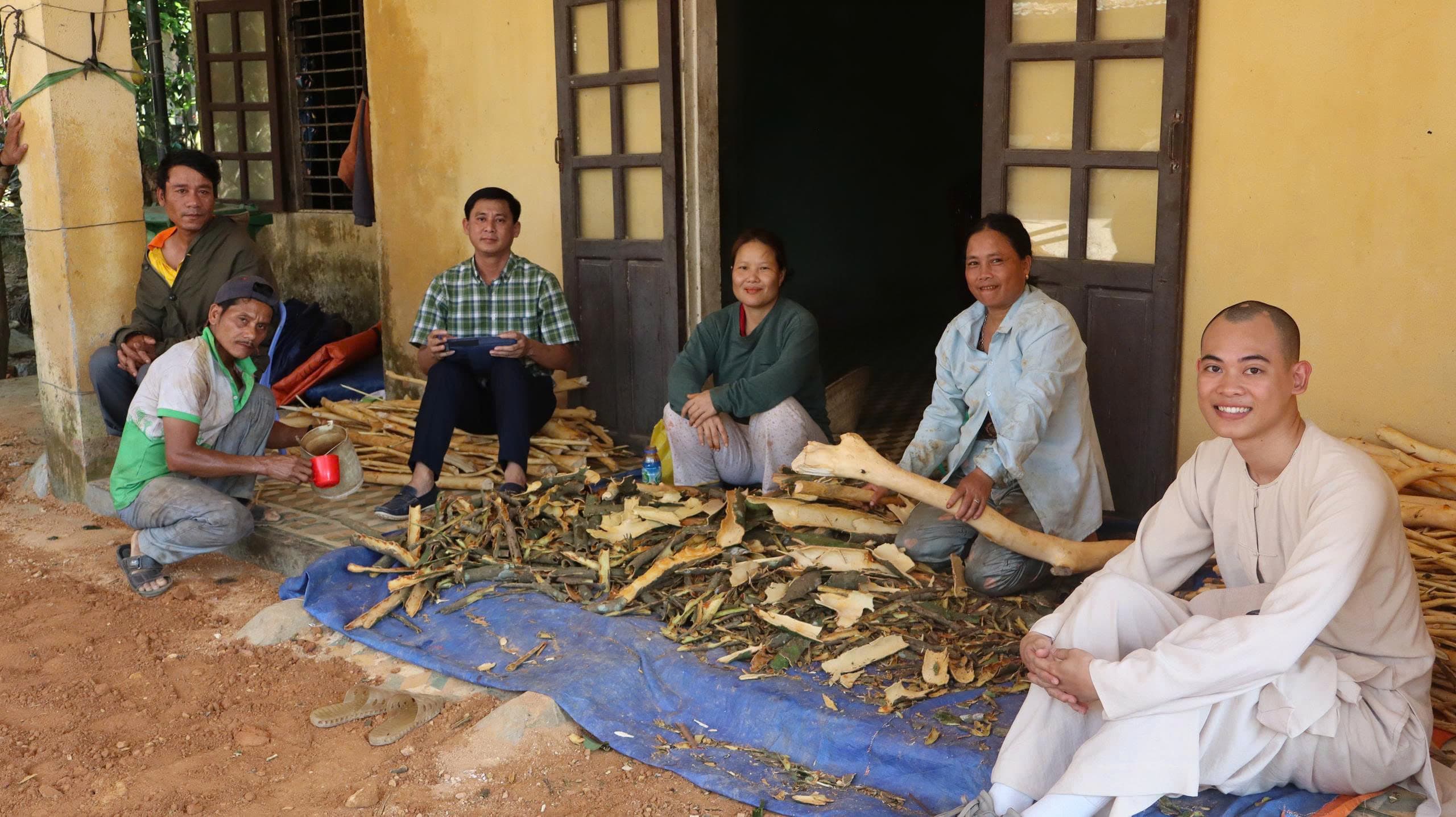
Under a simple eaves, the image of an old man with calloused hands, tapping a wooden stick rhythmically against a cinnamon branch, evokes a slow but arduous pace of life. Stripping cinnamon bark requires patience; each tap must be forceful enough for the bark to crack without crushing the cinnamon flesh inside. Right next to him, on long green tarpaulins, mothers and sisters diligently scrape off rough layers of bark. Their hands are stained black with cinnamon resin, their eyes focused on every knife stroke, accumulating fragrant pieces of bark to earn food and clothing for their families.
However, behind these diligent labor images lies a silent sorrow. From ancient times until now, people have often only known how to take the precious bark, while the pure white cinnamon wood trunks, after being stripped of their bark, are left neglected, piled up next to their homes. They lie there, silently rotting with the rain and sun, a heartbreaking waste of resources that poor people don't know how to salvage. These cinnamon trees lying exposed in the vast forest are like the people's struggle to escape poverty.
Fortunately, a new wind named knowledge has blown into Trà Leng. The footsteps of experts and teachers from the University of Education, University of Da Nang, have reached the villages. Not only did they bring theoretical knowledge, but also their hearts and empathy. They sat down with the people, got their hands dirty, and guided them on how to maximize the value of the cinnamon tree, so that no part of the mountain's gift would be wasted.
Under the guidance of experts, from the white wood trunks that were once discarded, the people have learned to craft them into fine art products, turning them into vases, animal statues, etc., fragrant with the scent of the forest. Small branches and scattered leaves are now collected to distill into pure essential oils. Highly applicable products such as biological floor cleaner, cinnamon dish soap, or filtered cinnamon tea bags, scented sachets, cinnamon candles, cinnamon incense, etc., have successively been created. The cinnamon tree is now utilized from root to tip, opening new economic doors and significantly increasing the income of the people.