Speaking of the cuisine of the Trà Leng highlands in particular and the mountainous ethnic communities in general, many people will immediately remember cơm lam – a rustic dish cooked in young bamboo tubes over a fire. Not only is it a familiar specialty at festivals and community tourism activities, but cơm lam is also associated with the survival history of the ethnic minorities here.
Few people know that the origin of cơm lam began during the years when people lived in the mountains and forests, when living conditions were extremely difficult.
Cơm lam was born from the nomadic life of highland communities
According to the elders in Trà Leng, in the past, the people mainly lived on high mountains, their lives closely tied to swidden cultivation and heavily dependent on natural conditions. The vast forests not only provided food and water but also sheltered and nurtured generations of highland people.
After each harvest season, the land gradually lost its fertility, so people had to find new areas to continue production. Therefore, their dwelling places constantly changed with each farming season. Today on this mountainside, a few months later they would move to another land. This continuous movement became a familiar part of the people's lives, especially during periods when production methods were still self-sufficient.
The nomadic life meant that building houses was only temporary. Houses were simply made of wood and bamboo for easy dismantling or abandonment when moving to a new place. Household items such as pots, pans, and dishes were also very limited because carrying too many belongings while traversing forests, streams, or steep mountainsides was not easy.
In such circumstances, the people found ways to utilize readily available natural materials for their daily lives. From building houses, weaving tools, to preparing food, everything relied on their ingenuity and experience accumulated over many generations. It was from these special living conditions that many unique food preparation methods were born, including cơm lam – a simple creation that embodies the wonderful adaptability of people to the mountains and forests of Trà Leng.
Why does Trà Leng cơm lam have a special flavor?
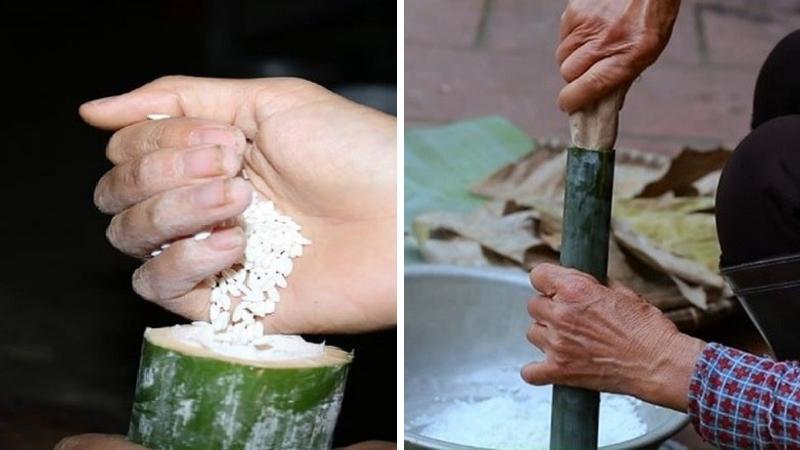
The difference of cơm lam does not lie in elaborate ingredients but in the preparation method and the experience passed down through many generations. During grilling, the young bamboo tube acts as a natural pot. The rice grains are slowly cooked by the heat of the embers and the kitchen fire, helping to retain their stickiness, natural sweetness, and characteristic aroma. When the outer layer is charred, the essential oils from the young bamboo gradually permeate each grain of rice, creating a unique fragrance that conventional cooking methods can hardly achieve.
To get a delicious tube of cơm lam, the cook must choose bamboo of the right age, neither too old nor too young. The amount of water added to the tube also needs to be balanced so that the rice cooks evenly, neither dry nor mushy. It is this meticulousness in each step that contributes to the distinctive flavor of this rustic dish.
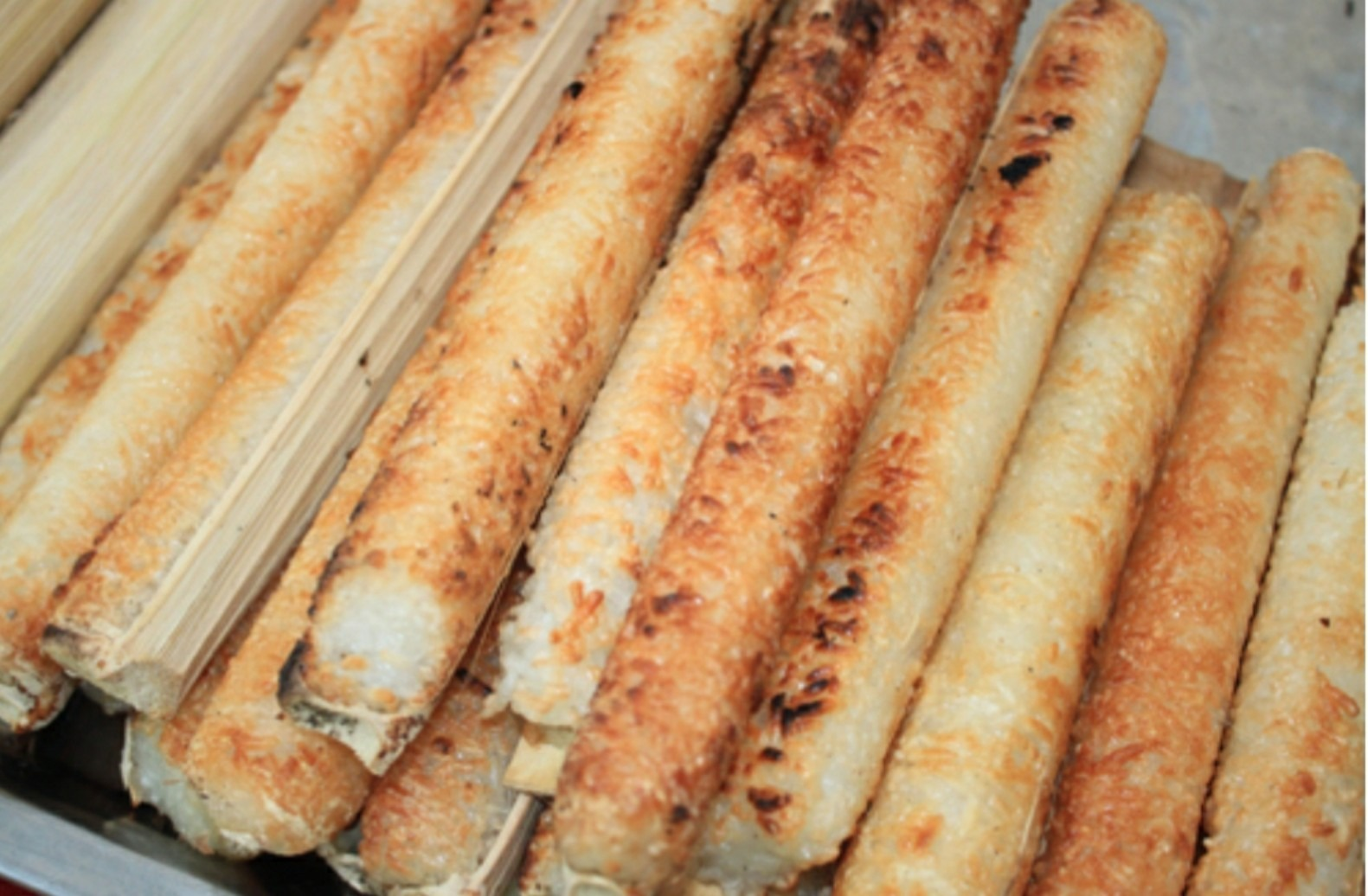
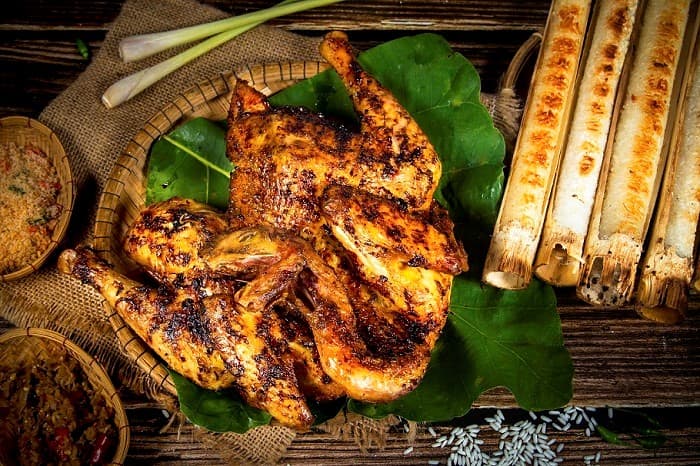
Today, cơm lam is often served with grilled chicken, grilled meat, sesame salt, or traditional dishes of the Ca Dong, Xơ Đăng, and Mơ Nông people. The sticky and fragrant rice blends with the rich flavor of grilled dishes, creating a harmonious combination that embodies the culinary identity of the Trà Leng highlands.
Not only appearing in daily meals, cơm lam is also a familiar dish at festivals, cultural events, and community gatherings. For many local people, each tube of cơm lam contains the flavor of the mountains and forests and preserves memories of a life closely associated with swidden fields, forest trips, and nights gathered around the fire.