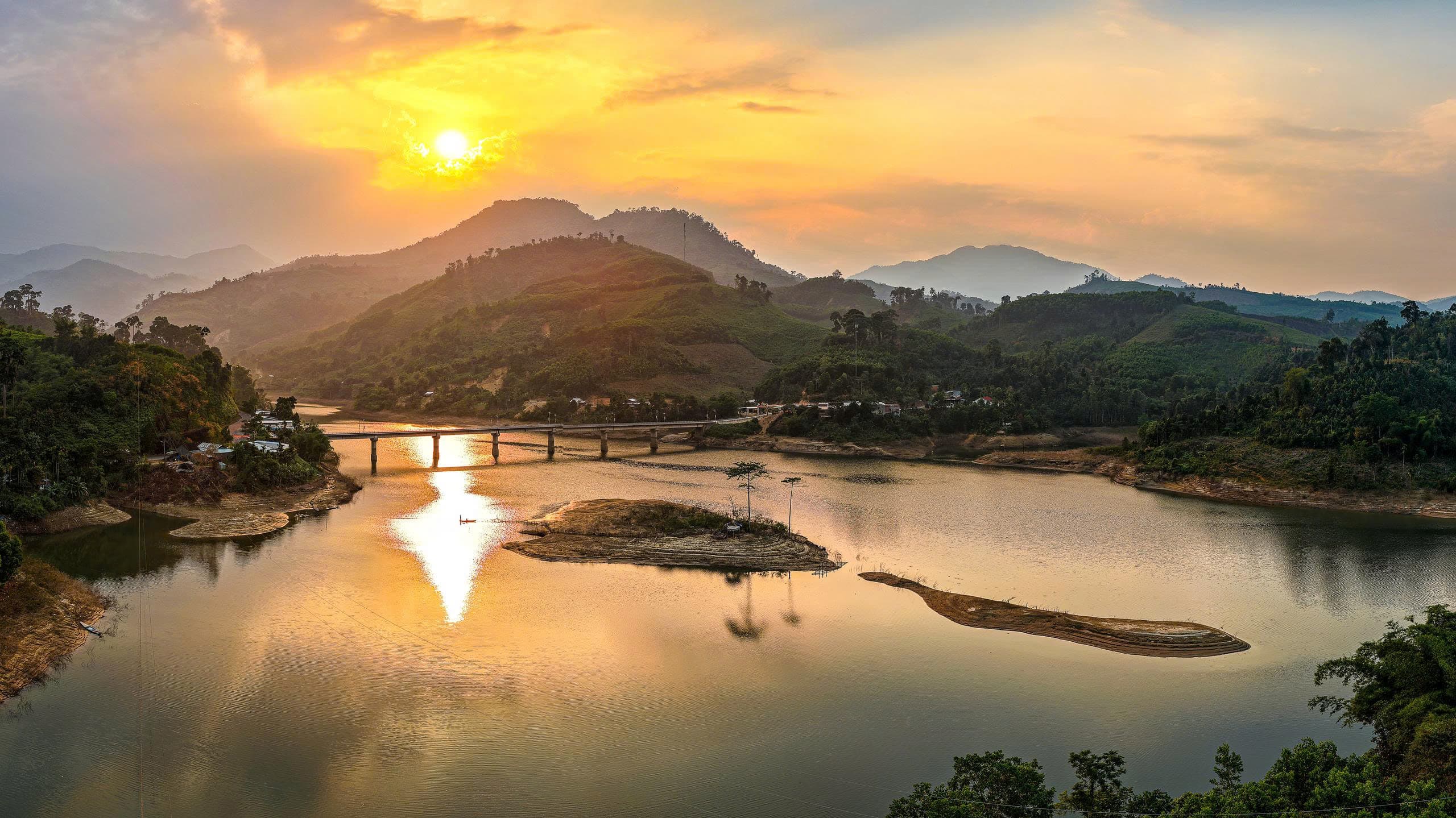
Visit for a day and you see that Trà Leng is beautiful. Stay a night and you begin to understand it. The difference lies in the hours a passing visitor never reaches: the evening when the whole village gathers around the fire, and the early morning when the mist has not yet lifted and people are already heading up to the fields.
The rhythm of a day in the village
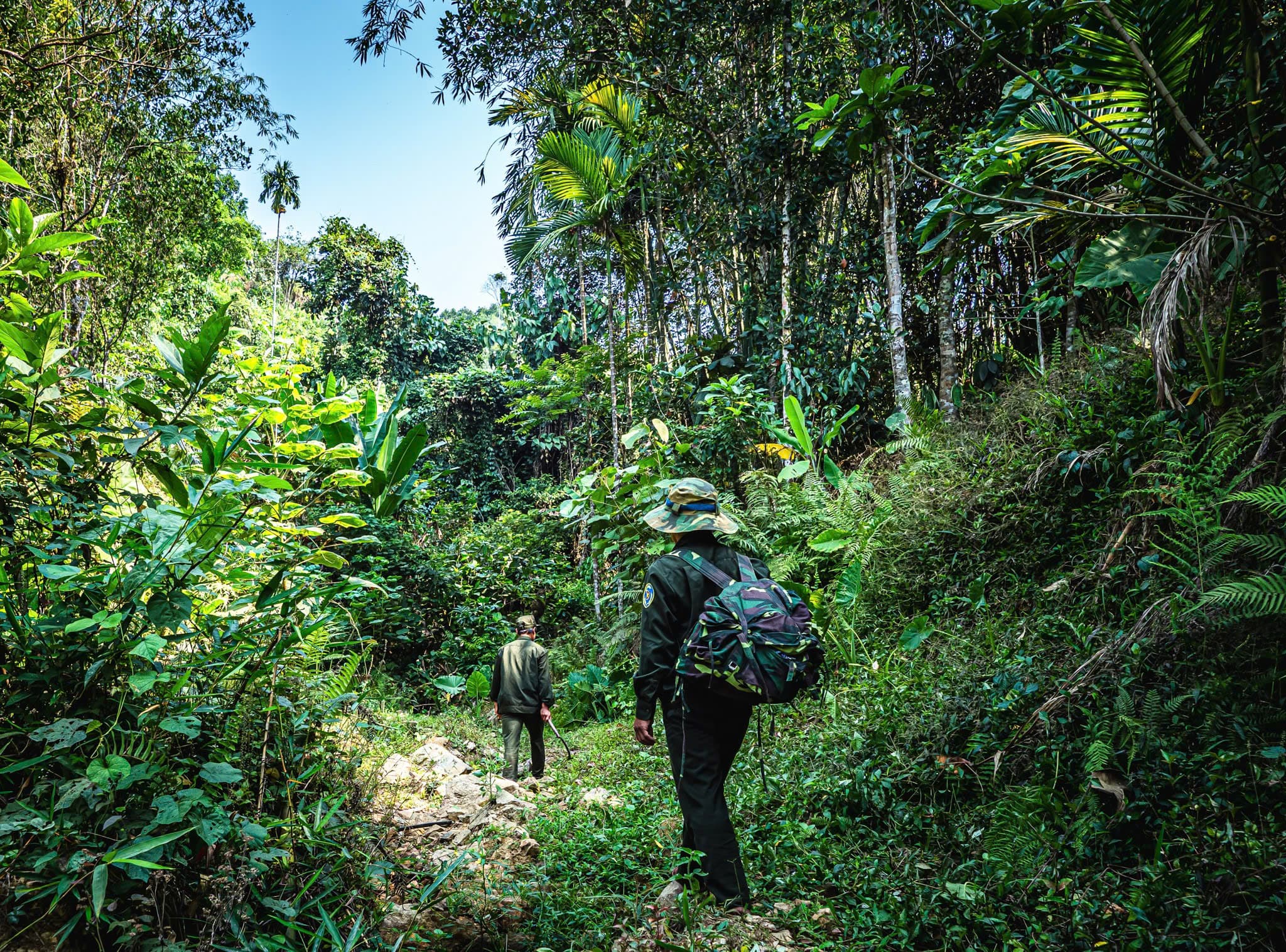
The day begins very early here. Around four or five in the morning the fires are already lit, and the sound of roosters and of people calling to one another carries through the mist. People head to the fields or into the forest to strip cinnamon bark while the air is still cool, avoiding the harsh midday sun. By nine or ten the village is almost empty — only elders and small children remain.
In the late afternoon the stream of people returns, baskets on their backs full of firewood, forest greens or cinnamon bark. This is when the village is most alive: children bathing in the stream, women lighting the cooking fires, men repairing tools. If you want to photograph real daily life, this is the best hour — for the light and for the atmosphere alike.
The meal around the fire
The food of highland Trà Leng is plain and tied closely to the forest. A meal for guests usually includes cơm lam, rice roasted in bamboo tubes, cá niên caught in the stream and grilled over coals, smoke-dried meat, wild rau lũi greens, soup cooked in a bamboo tube, and a jar of rượu cần placed in the middle for everyone to share.
A few things worth knowing at the table: rượu cần is a ceremonial drink, offered in a set order and carrying a meaning of connection, so take the drinking tube with both hands and follow the rhythm your host sets. If you cannot drink, just say so cheerfully and honestly — highland people do not press guests, but they read attitude very well.
Evening and the sound of gongs
Gongs in Trà Leng are not a stage act. They sound at moments that carry meaning: the new rice celebration, the sealing of a bond between communities, the farewell of guests. When a full gong troupe plays at night in the mountains, the sound strikes the forest walls and echoes back, creating a resonance that no recording captures.
If the village holds a gong evening for visitors, take part properly: stand up and join the dance circle when you are invited, rather than watching from the edge with a phone raised. Guests joining in is what the villagers enjoy most.
Gongs are the voice of the forest — the elders in the village still say so. And that voice truly sounds only for those who stay long enough to hear it.
Conduct: the rules nobody writes down
Community tourism differs from resort tourism in that you are a guest in someone's home, not a customer of a service business. A few principles keep the relationship comfortable for both sides:
Ask before taking photographs, particularly of elders, children and during rituals. Some ceremonies may not be filmed at all.
Dress modestly and respectfully while in the village and when attending a ritual.
Ask before entering a house or touching objects, especially gongs, wine jars and items used in worship.
Keep your voice down after dark — the village sleeps early because it rises early.
Carry your rubbish back down the mountain, including small things like cigarette filters and sweet wrappers.
Do not hand out money or snacks to children along the road. If you want to help, ask the village head or your host what the community actually needs.
Making sure your money stays in the right place
The best thing a trip can leave behind is income that reaches the residents themselves. Choose to stay in family homes or homestays run by people from the village, hire local guides for forest walks, eat meals cooked by the household, and buy produce directly: a packet of cinnamon, a piece of brocade, a jar of forest honey.
Equally, avoid what harms the place you are visiting: trading in wildlife, breaking off plants as samples, wandering deep into the forest without a guide, or staging scenes for photographs. A decent trip is remembered not by the number of pictures you bring home, but by the fact that next time you return you are welcomed as someone familiar.
How many nights to stay
One night is enough to touch it. Two or three nights are enough for the rhythm here to settle into you: you start waking early without an alarm, you can tell the near stream from the far one, and you realise that the smell of cinnamon in the morning air is the thing that will follow you back down the mountain.