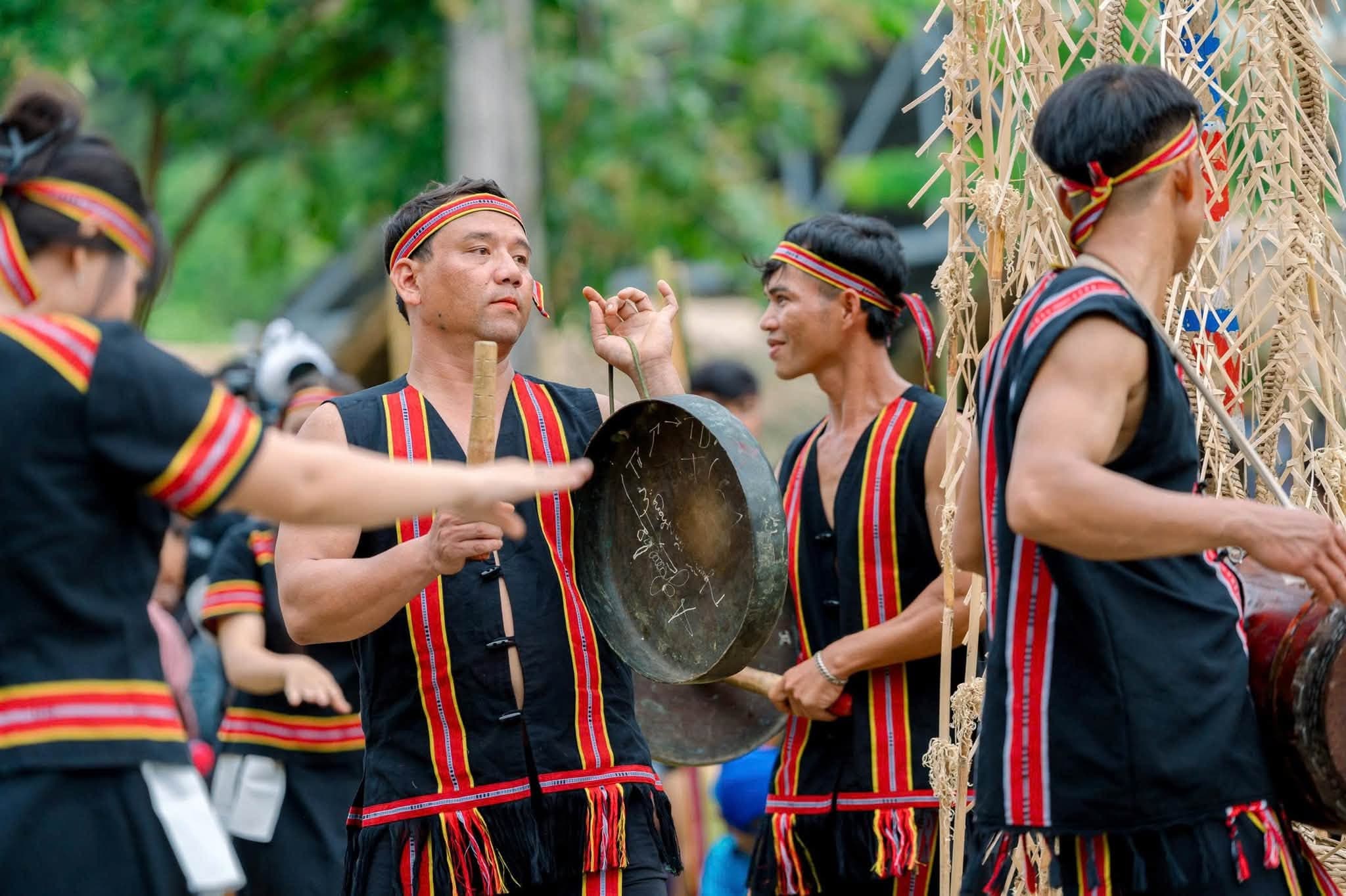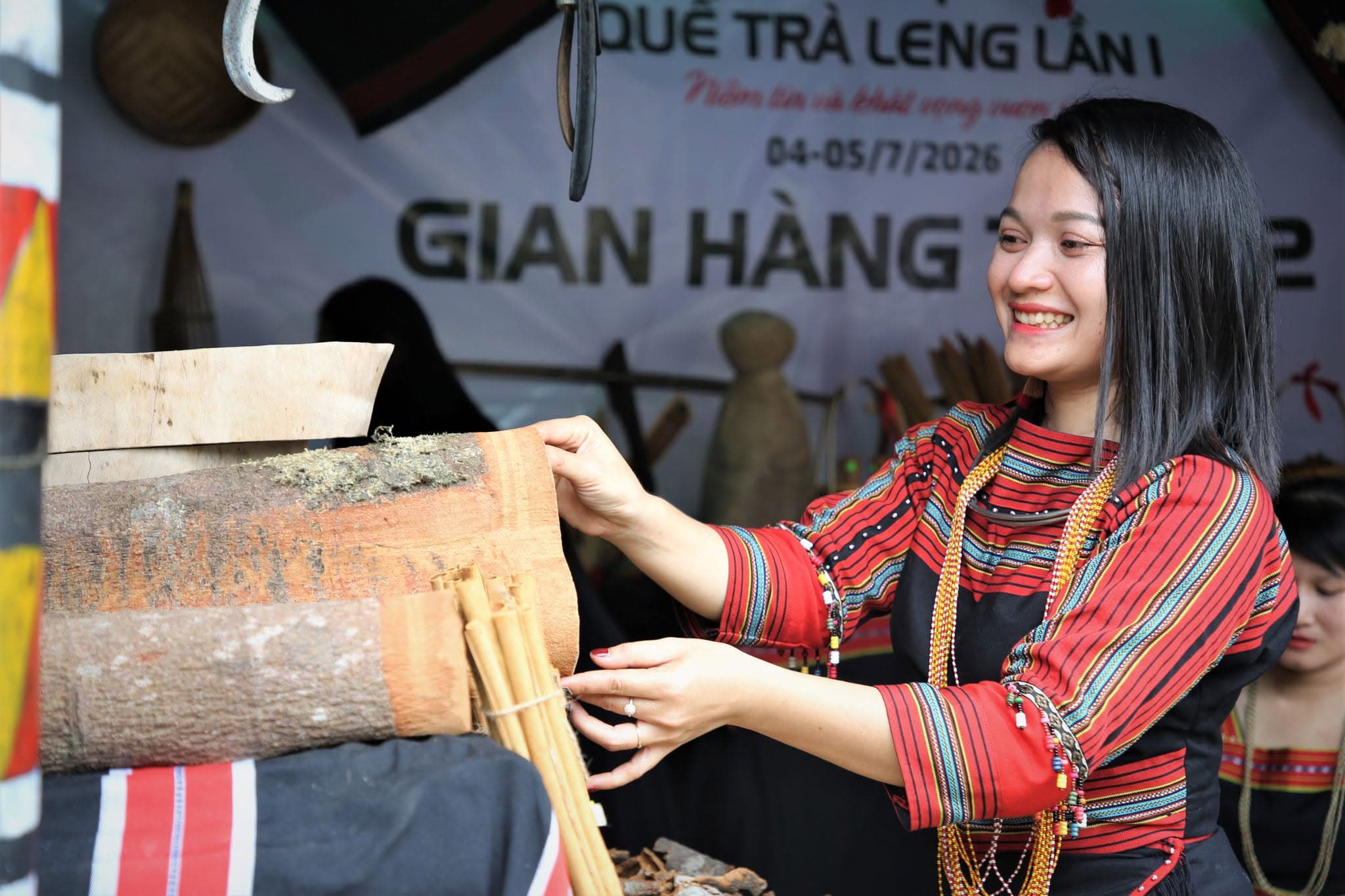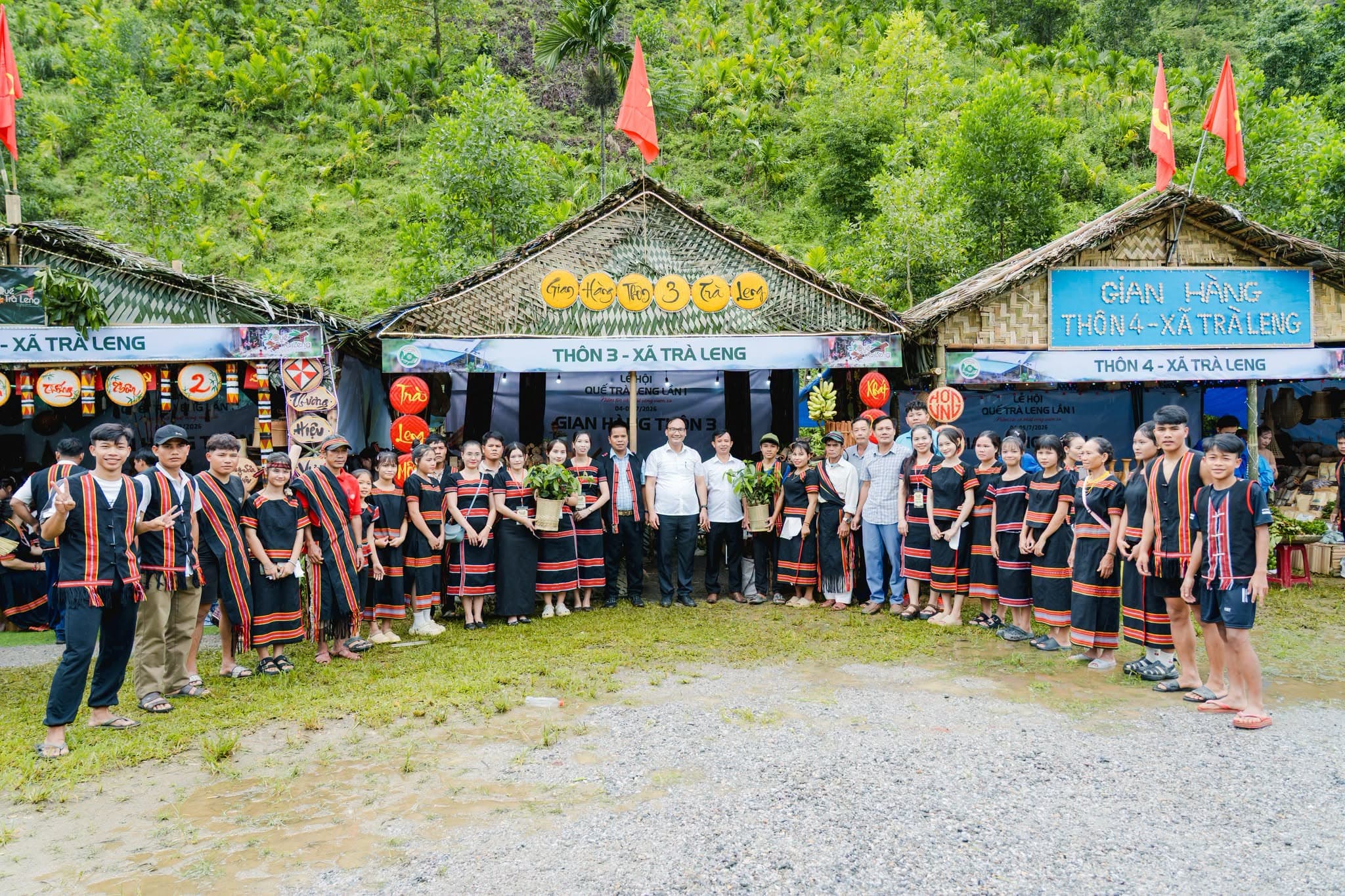
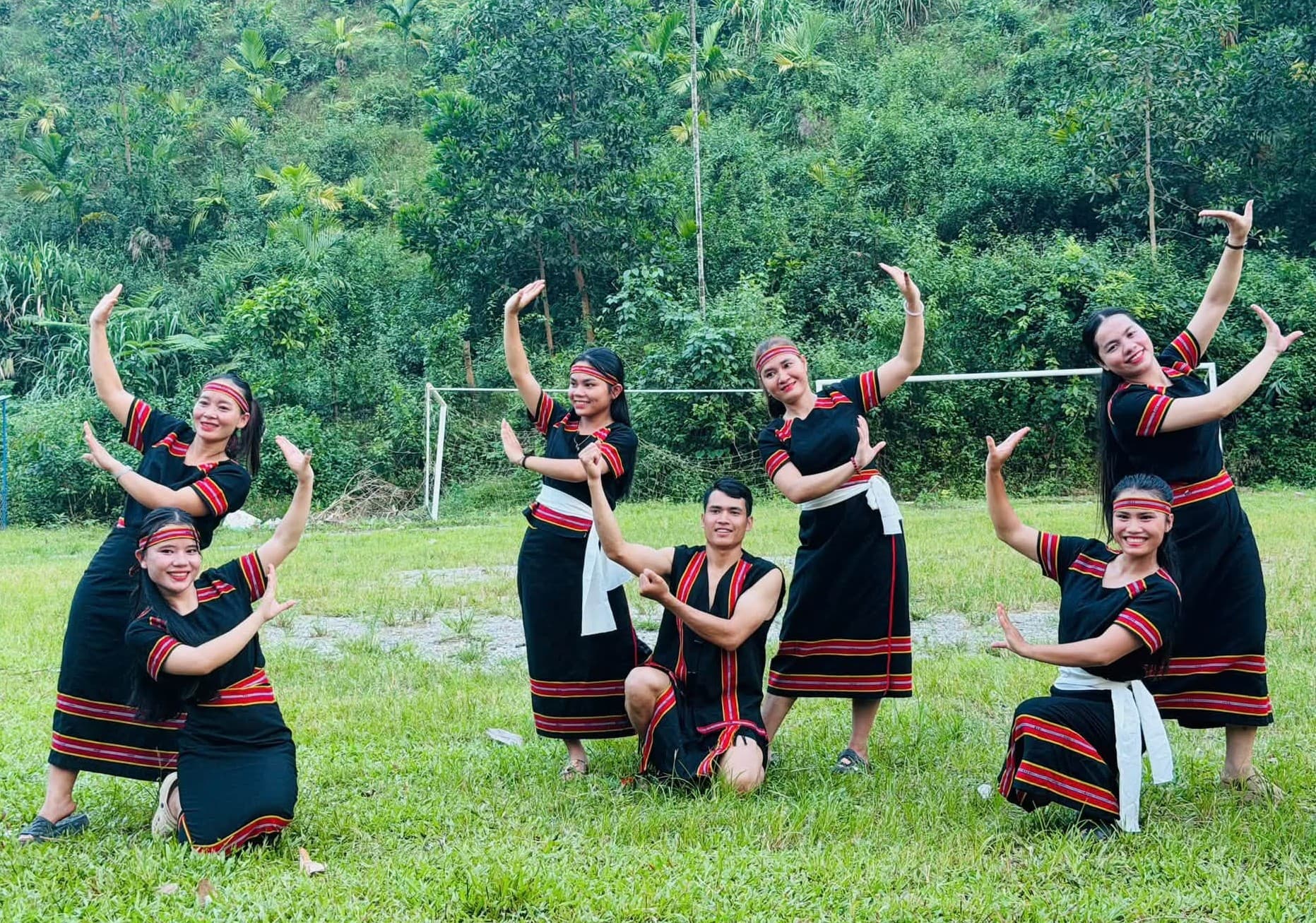
On October 25th, at Bằng La residential area, Trà Leng commune, Da Nang city organized the M'nông ethnic group's Water Trough Worship Festival in 2026. This is a cultural activity with deep spiritual significance, expressing gratitude towards water sources, nature, and the community's wish for a peaceful and prosperous life.
The festival is also an occasion for the M'nông people to preserve and promote their traditional cultural identity, strengthen community solidarity, and raise awareness about protecting water sources – an essential element for the life and production of people in the highlands.
The festival space is rich in traditional cultural colors
Before the festival, preparations at Bằng La residential area were carried out with many practical tasks. From renovating the traditional house and the upstream water area to erecting the Neu pole, cleaning pathways, and tidying the event space, each task contributed to creating a solemn and clean appearance for the festival day.
The festive atmosphere gradually became lively with the resounding gongs and practiced traditional dances. The preparation activities both created a welcoming space for locals and tourists and demonstrated the community's joint effort in preserving cultural values passed down through generations.
Traditional house, water trough, and Neu pole – cultural imprints amidst the vast mountains §9§ In the festival space at Bằng La residential area, the traditional house, water trough, and Neu pole are typical images that help recreate the cultural life and beliefs of the M'nông people. Each structure and object is associated with unique values, reflecting the close relationship between humans and the community, nature, and the spiritual world preserved through many generations. §10§ The traditional house, also known as the "ưng" house, is a community living space where important events, traditional rituals, and cultural exchange activities take place. Built with natural materials such as bamboo and reeds, combined with a thatched roof, the house has a rustic appearance, close to the mountain and forest landscape. This is also where cultural values are passed down, where the community gathers, connects, and maintains the customs and practices of their people. §11§ The traditional house of the M'nông people in Bằng La residential area, Trà Leng commune. §12§ Closely linked to the lives of the people is the traditional water trough – water from upstream led to living areas through bamboo pipes. The water flowing from the mountains and forests not only serves daily needs but also holds significant meaning for the community's spiritual life. The Water Trough Worship Ceremony expresses gratitude towards nature, appreciation for water sources, and the wish for a peaceful and prosperous life. Through this, the festival also reminds everyone of their responsibility to preserve clean water, protect upstream forests, and the ecological environment. §13§ Traditional water trough of the M'nông people. §14§ Another highlight in the festival space is the Neu pole, crafted from readily available natural materials and decorated with handcrafted details such as circles, tassels, and symbolic items. With its prominent shape in the event area, the Neu pole contributes to creating a solemn atmosphere, while also showcasing creativity and skill in folk decorative art. Erecting the Neu pole also helps highlight the traditional cultural space, creating a focal point for locals and tourists to learn about the customs and beliefs of the M'nông people. §15§ The Neu pole at the M'nông Water Trough Worship Festival. §16§ Water Trough Worship Ceremony – expressing gratitude and wishes for peace §17§ For the M'nông people, water is linked to daily life, production, and the community's existence. The Water Trough Worship Ceremony therefore carries the meaning of showing gratitude to water sources, nature, and praying for a peaceful life, bountiful harvests, and prosperous families. §18§ Through the traditional ritual, people have the opportunity to show their respect for upstream water sources, remind each other to preserve the natural environment, and protect water sources for life. This is also an occasion for generations to meet, share, and continue the customs and practices that bear the cultural imprint of their people. §19§ Maintaining the festival contributes to affirming the community's role in preserving intangible cultural heritage, and at the same time creates conditions for the younger generation to better understand their origins and the spiritual values of their ancestors. §20§ Connecting cultural preservation with community tourism development §21§ The Water Trough Worship Festival in Bằng La opens up opportunities to introduce the unique cultural features of the M'nông people to locals and tourists. Through rituals, gongs, traditional dances, and community living spaces, visitors can gain a deeper understanding of the spiritual life and the close relationship between humans and nature in Trà Leng. §22§ If connected with suitable experiential activities such as learning about local culture, enjoying traditional cuisine, and exploring the local landscape, the festival can become a highlight in the development of community tourism in Bằng La. The organization needs to place the local community at the center, respect the sacred meaning of the rituals, and ensure that cultural values are introduced in the true spirit of tradition. §23§ The 2026 Water Trough Worship Festival is an occasion for the M'nông people in Trà Leng commune to preserve their identity, foster solidarity, and spread the message of water protection. From the cultural values passed down through many generations, Bằng La has another opportunity to introduce the image of a land rich in identity, contributing to connecting local culture with the orientation of sustainable community tourism development.
Trong không gian tổ chức lễ hội tại khu dân cư Bằng La, nhà truyền thống, máng nước và cây nêu là những hình ảnh tiêu biểu, góp phần tái hiện đời sống văn hóa và tín ngưỡng của đồng bào M’nông. Mỗi công trình, vật dụng đều gắn với những giá trị riêng, phản ánh mối quan hệ mật thiết giữa con người với cộng đồng, thiên nhiên và thế giới tâm linh được gìn giữ qua nhiều thế hệ.
Nhà truyền thống, hay còn gọi là nhà ưng, là không gian sinh hoạt cộng đồng, nơi diễn ra các sự kiện quan trọng, những nghi lễ truyền thống và hoạt động giao lưu văn hóa. Được dựng bằng các vật liệu tự nhiên như lồ ô, nứa, kết hợp với mái lợp lá tranh, ngôi nhà mang vẻ mộc mạc, gần gũi với cảnh quan núi rừng. Đây cũng là nơi các giá trị văn hóa được trao truyền, nơi cộng đồng cùng gặp gỡ, gắn kết và duy trì những phong tục tập quán của dân tộc mình.
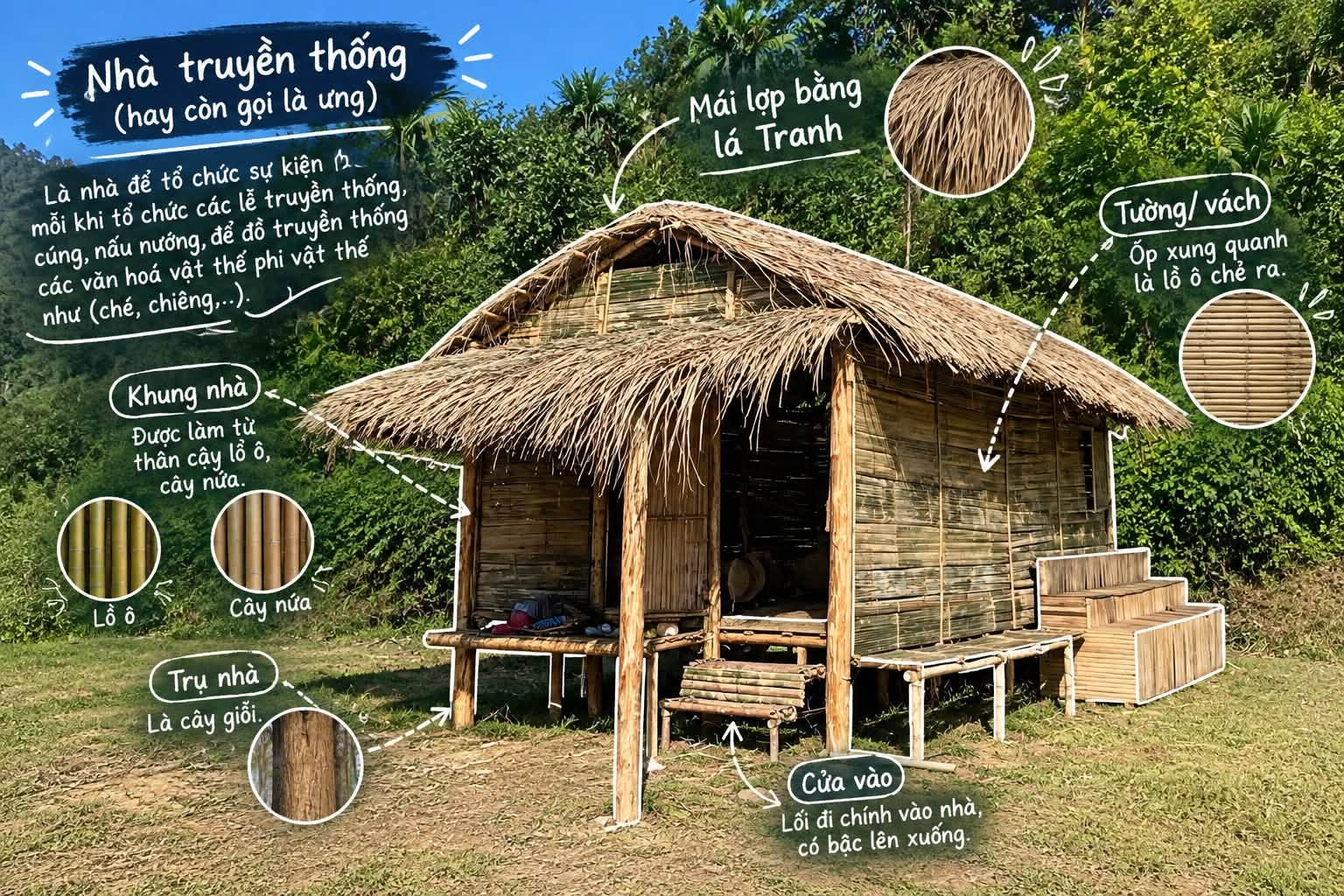
Nhà truyền thống của đồng bào M’nông tại khu dân cư Bằng La, xã Trà Leng.
Gắn liền với đời sống của người dân là máng nước truyền thống - nguồn nước từ thượng nguồn được dẫn về nơi sinh hoạt bằng những ống nứa. Dòng nước chảy từ núi rừng không đơn thuần phục vụ nhu cầu hằng ngày mà còn mang ý nghĩa quan trọng đối với đời sống tinh thần của cộng đồng. Lễ Cúng máng nước thể hiện lòng biết ơn đối với thiên nhiên, sự trân trọng nguồn nước và ước vọng về cuộc sống bình an, no ấm. Qua đó, lễ hội cũng nhắc nhở mỗi người về trách nhiệm gìn giữ nguồn nước sạch, bảo vệ rừng đầu nguồn và môi trường sinh thái.
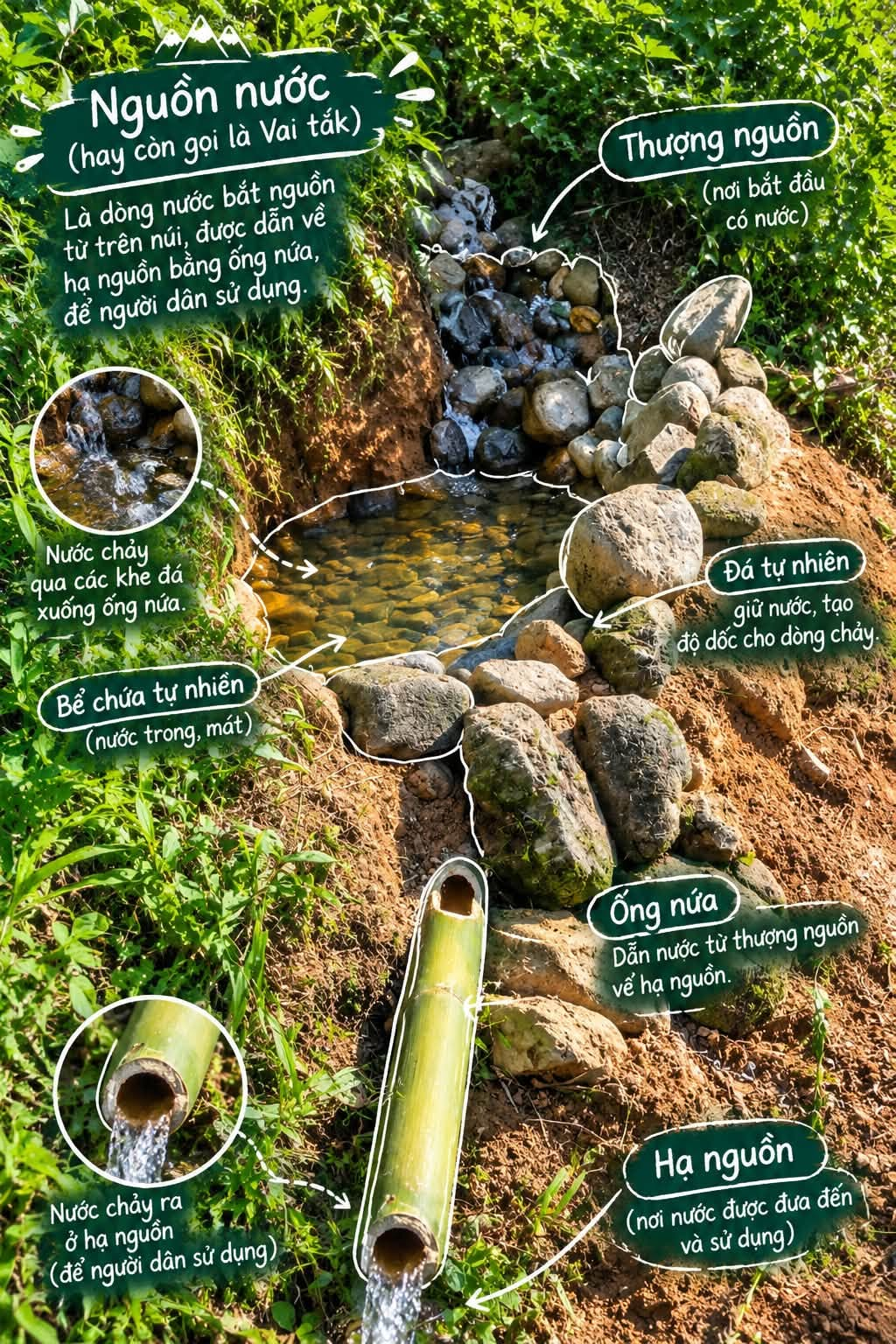
Máng nước truyền thống của đồng bào M’nông.
Một điểm nhấn khác trong không gian lễ hội là cây nêu được tạo tác từ những vật liệu sẵn có trong tự nhiên, trang trí bằng các chi tiết thủ công như vòng tròn, tua rua và những vật phẩm mang ý nghĩa biểu tượng. Với hình dáng nổi bật giữa khu vực tổ chức, cây nêu góp phần tạo nên không khí trang trọng, đồng thời thể hiện nét sáng tạo và sự khéo léo trong nghệ thuật trang trí dân gian. Việc dựng cây nêu cũng góp phần làm nổi bật không gian văn hóa truyền thống, tạo điểm nhấn để người dân và du khách tìm hiểu về phong tục, tín ngưỡng của đồng bào M’nông.
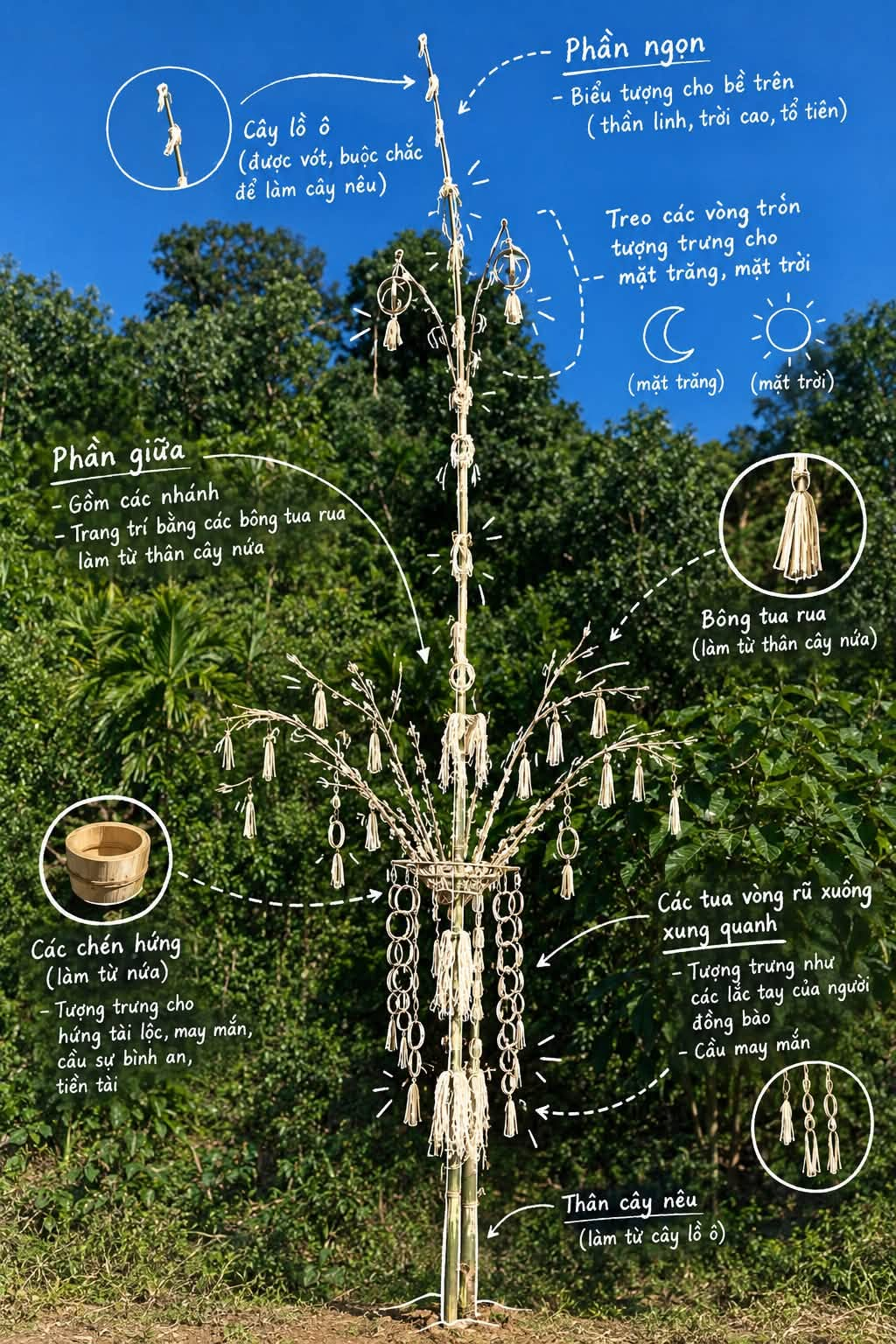
Cây nêu trong Lễ hội Cúng máng nước của đồng bào M’nông.
Lễ Cúng máng nước - gửi gắm lòng biết ơn và ước vọng bình an
Đối với đồng bào M’nông, nước gắn liền với đời sống sinh hoạt, sản xuất và sự tồn tại của cộng đồng. Lễ Cúng máng nước vì thế mang ý nghĩa tri ân nguồn nước, thiên nhiên và cầu mong cuộc sống bình an, mùa màng thuận lợi, gia đình no ấm.
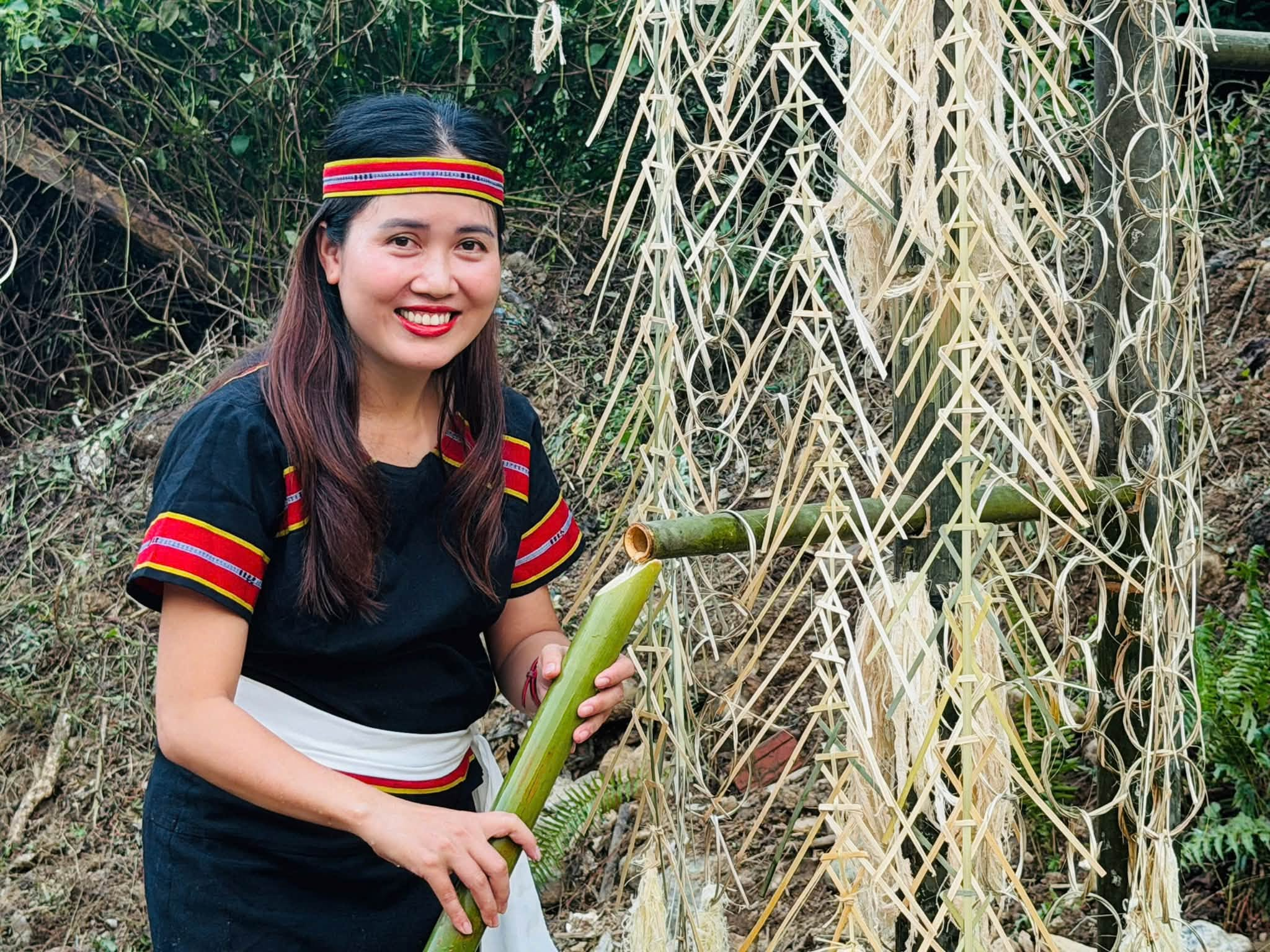
Thông qua nghi lễ truyền thống, người dân có dịp thể hiện sự trân trọng đối với nguồn nước đầu nguồn, nhắc nhở nhau gìn giữ môi trường tự nhiên và bảo vệ nguồn nước phục vụ đời sống. Đây cũng là dịp để các thế hệ cùng gặp gỡ, chia sẻ và tiếp nối những phong tục, tập quán mang dấu ấn văn hóa của dân tộc mình.
Việc duy trì lễ hội góp phần khẳng định vai trò của cộng đồng trong bảo tồn di sản văn hóa phi vật thể, đồng thời tạo điều kiện để thế hệ trẻ hiểu hơn về cội nguồn và những giá trị tinh thần của cha ông.
Gắn bảo tồn văn hóa với phát triển du lịch cộng đồng
Lễ hội Cúng máng nước tại Bằng La mở ra cơ hội giới thiệu những nét văn hóa đặc sắc của đồng bào M’nông đến với người dân và du khách. Thông qua nghi lễ, tiếng cồng chiêng, điệu múa truyền thống và không gian sinh hoạt cộng đồng, du khách có thể tìm hiểu sâu hơn về đời sống tinh thần cũng như mối quan hệ gắn bó giữa con người với thiên nhiên tại Trà Leng.
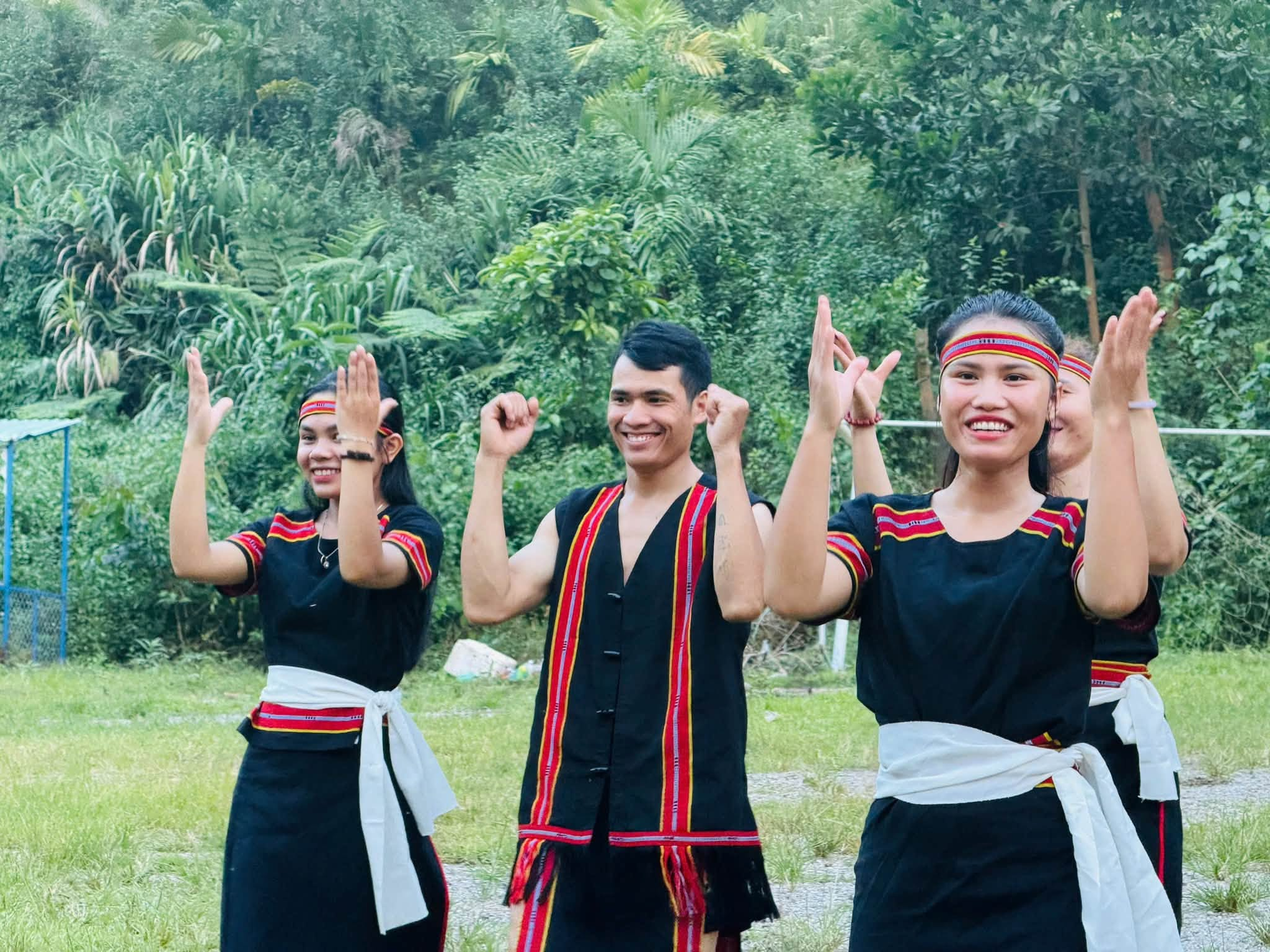
Nếu được kết nối với các hoạt động trải nghiệm phù hợp như tìm hiểu văn hóa bản địa, thưởng thức ẩm thực truyền thống và khám phá cảnh quan địa phương, lễ hội có thể trở thành một điểm nhấn trong phát triển du lịch cộng đồng tại Bằng La. Việc tổ chức cần đặt cộng đồng địa phương ở vị trí trung tâm, tôn trọng ý nghĩa thiêng liêng của nghi lễ và bảo đảm các giá trị văn hóa được giới thiệu đúng với tinh thần truyền thống.
Lễ hội Cúng máng nước năm 2026 là dịp để đồng bào M’nông tại xã Trà Leng cùng gìn giữ bản sắc, vun đắp tinh thần đoàn kết và lan tỏa thông điệp bảo vệ nguồn nước. Từ những giá trị văn hóa được lưu truyền qua nhiều thế hệ, Bằng La có thêm cơ hội giới thiệu hình ảnh một vùng đất giàu bản sắc, góp phần kết nối văn hóa bản địa với định hướng phát triển du lịch cộng đồng bền vững.