
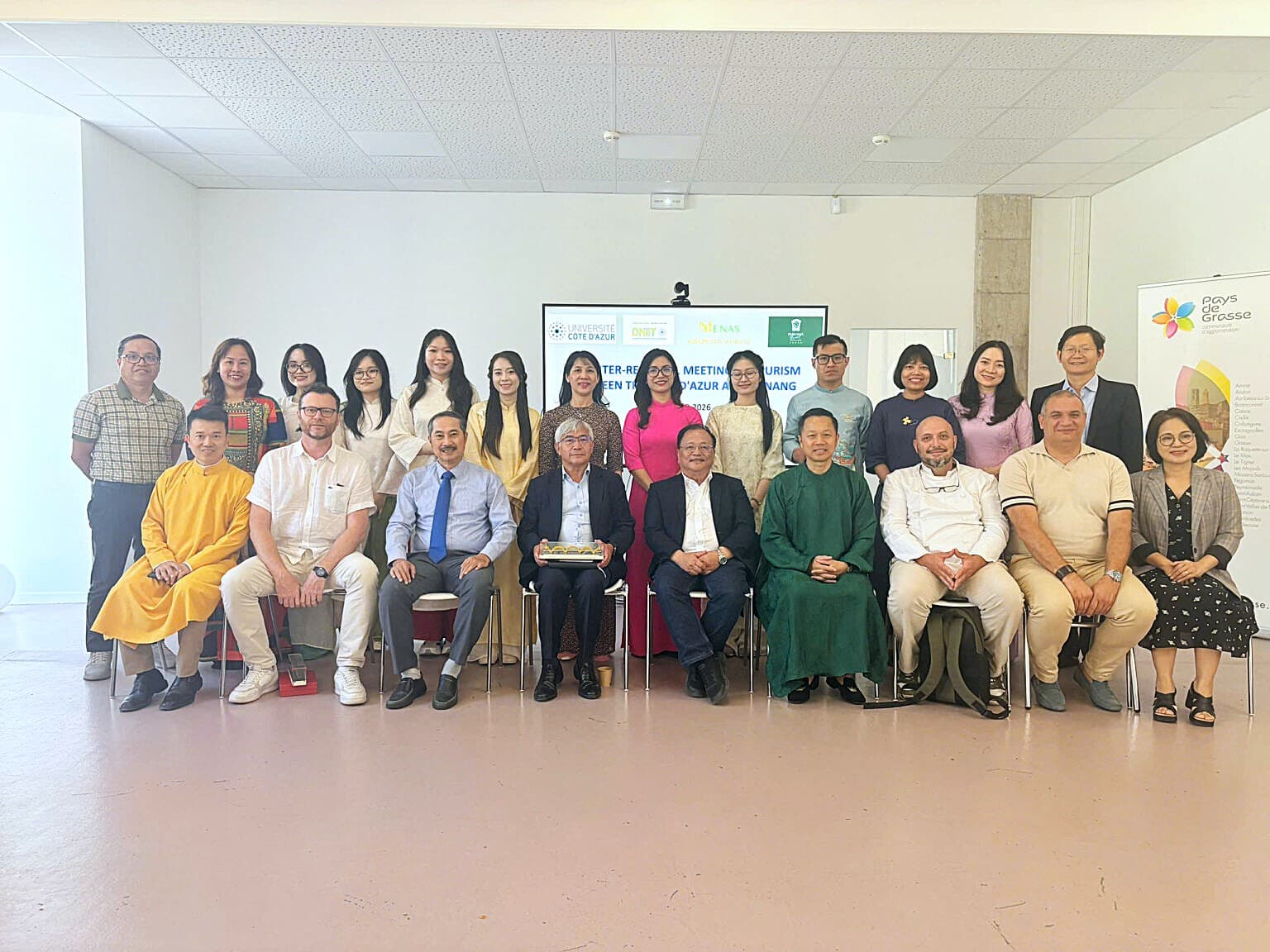
At the international workshop “Aromas and Perfumes in Tourism” held in Nice, France, on June 16, representatives of Da Nang's tourism industry proposed exploiting the values associated with local scents as a new tourism resource. This idea aims to create distinct experiences, enhance service quality, and increase the attractiveness of Vietnam as a destination.
Scent Can Become an Unforgettable Mark of the Journey
Within the framework of the workshop, Mr. Nguyen Duc Quynh, Vice Chairman of the Da Nang Tourism Association and Chairman of the Da Nang Hotel Association, presented a paper titled “Aromas and Perfumes in Vietnamese Tourism: From Olfactory Heritage to Premium Experience”.
According to him, Vietnam's tourism image has long been associated with nature, culture, cuisine, and the friendliness of its people. However, besides these easily recognizable elements, there is another special kind of value: memories preserved through the perception of scent.
Familiar fragrances such as the lotus scent in Hanoi tea, the agarwood smell in spiritual spaces, the cinnamon and star anise in pho, the lemongrass scent in spas, the coffee aroma of the Central Highlands, or the sea smell of Da Nang after a rain, all have the ability to create a profound impression on tourists.
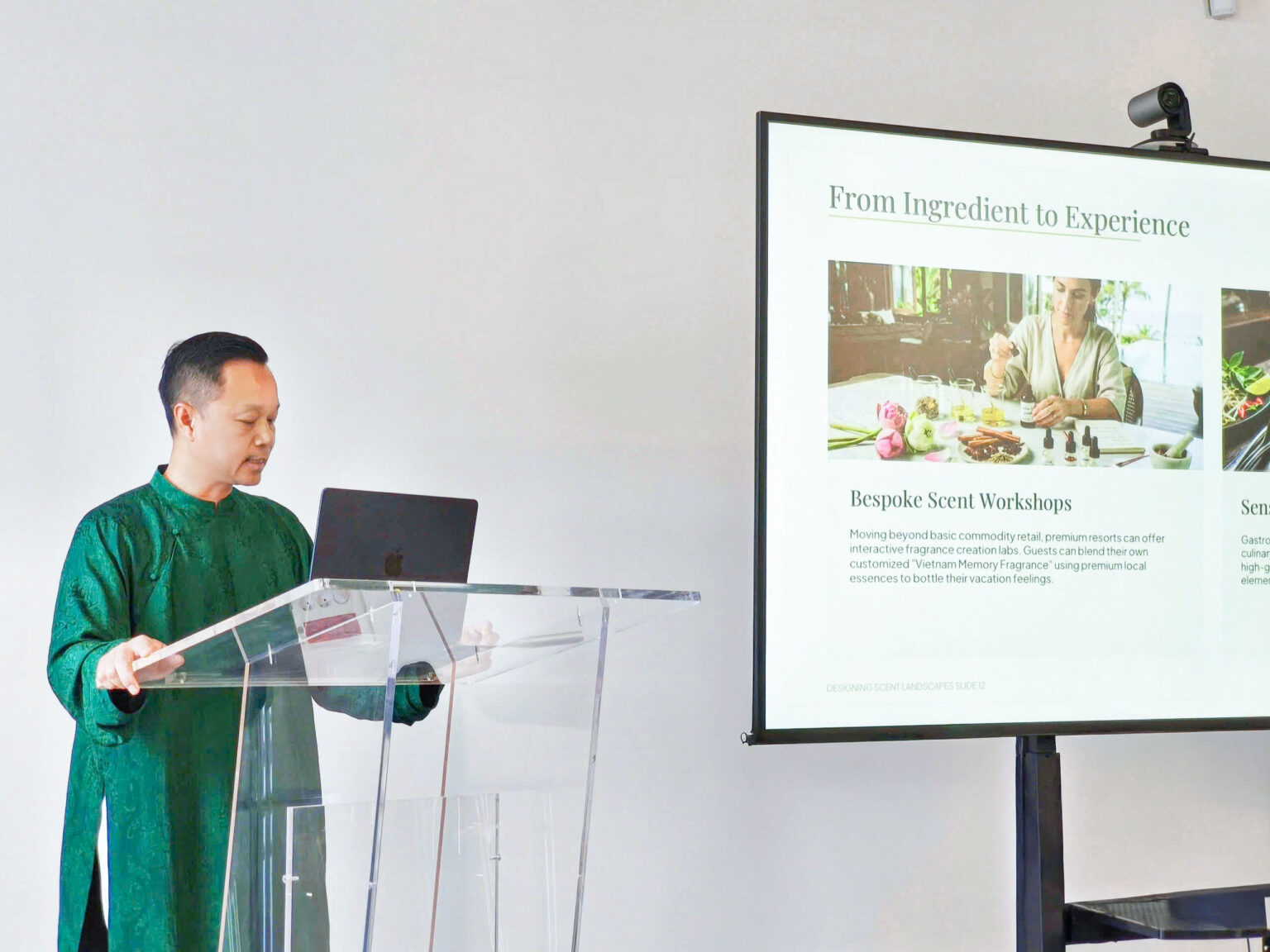
Mr. Nguyen Duc Quynh, Vice Chairman of Da Nang Tourism Association, Chairman of Da Nang Hotel Association
New Direction as Tourism Focuses on Quality Over Quantity
The idea of developing tourism based on scent was proposed during a period when Da Nang is focusing on enhancing the quality of experiences rather than just aiming for an increase in visitor numbers.
According to data presented at the workshop, in 2025, the city recorded over 17.3 million overnight stays, including more than 7.6 million international visitors. Revenue from accommodation, food, and travel activities reached approximately 60,000 billion VND. The entire city currently has 2,365 accommodation establishments with nearly 62,000 rooms, more than half of which are in the 4-5 star segment and equivalent.
Experts believe that once the tourism industry reaches a large scale, the goal should not only be to increase the number of visitors. More importantly, it is about extending the length of stay, increasing spending, and creating reasons for tourists to return. In the context of growing demand for emotional, health-focused, and local identity-driven tourism, scent is seen as a factor that can help differentiate a destination.
Abundant Aromatic Raw Materials in Central Vietnam
Representatives of the Da Nang Tourism Association stated that Central Vietnam possesses many valuable aromatic raw materials such as Quế, Tràm, Sả, Gừng, Hương Nhu, Bạc Hà, and various other fragrant woods.
Among them, Quế Trà My from Quảng Nam and Tràm Huế are considered prominent raw materials with the potential to be developed into products for tourism, healthcare, cosmetics, and high-end gifts. From these indigenous raw materials, the tourism industry can develop various product lines such as essential oils, scented candles, room perfumes, massage oils, spa products, or souvenirs themed “Scents of Central Vietnam”.
Wide Applicability in the Accommodation Industry
Hotels, resorts, and retreats can create their own signature scents for lobbies, guest rooms, spas, convention centers, or event spaces. These aromatic signatures not only support brand recognition but also help preserve guests' emotions after their trip.
For segments such as MICE, wellness tourism, and luxury retreats, scents can also be developed into distinctive destination gifts. Gift sets inspired by sea scents, lemongrass, cajeput, or cinnamon are considered suitable choices for VIP guests, corporate clients, and international visitors.

Dr. Cao Tri Dung, Chairman of Da Nang Tourism Association
Dr. Cao Tri Dung, Chairman of the Da Nang Tourism Association, believes that the city's competitive advantage cannot rely solely on beaches, infrastructure, or accommodation systems. According to him, Da Nang needs to develop more products that can create emotional connections with tourists. Among these, scent is a highly potential factor because it can integrate memories, local identity, and service quality into a complete experience.
Experts assess that as tourism demand increasingly leans towards personal and emotional experiences, exploiting indigenous raw materials to create tourism products linked to culture and health can open new opportunities for Da Nang as well as the Central region in the international tourism market.
-67c69a726c4cb11c0334e52d8c276805_watermarked.jpg&w=3840&q=75)