
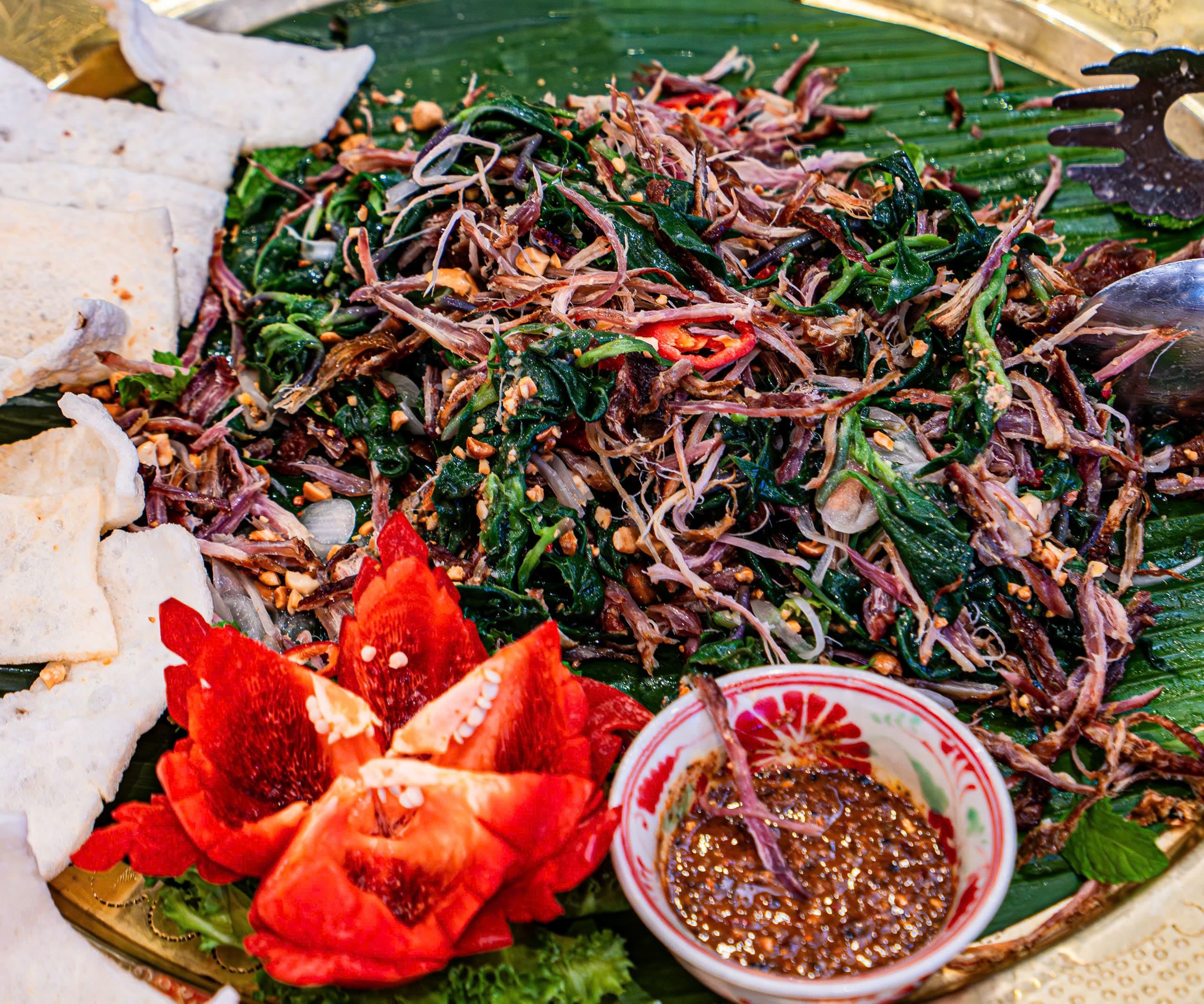
From the vast forests of Trà Leng, generations of people have preserved a culinary treasure trove that is rustic yet rich in identity. These are simple dishes, made from fragrant upland rice, small stream fish, free-range chickens, wild vegetables picked from the mountains, or spices hand-ground by the red hearths of the locals.
The cuisine of the mountainous ethnic minorities is not merely food to fill the stomach, but also the crystallization of life, customs, and the strong bond between humans and the mountains and forests. For generations, people living amidst the vast wilderness have known how to utilize the natural resources bestowed upon them to create a unique culinary culture—rustic yet profound, simple yet full of identity.
In every soft, fragrant bamboo-tube rice (cơm lam) and red rice of the ethnic people, there is a story of swidden fields, of rice seasons cultivated on mountain slopes. The young bamboo tubes used for grilling rice are not just a familiar cooking method, but also represent the harmony between humans and nature. Cơm lam and red rice have long become symbols of the people's lives, where every meal is always connected to the hearth, to laughter, and to togetherness.
Alongside these are grilled chicken, crispy fried stream fish, or smoked pork, dishes that bear the strong imprint of the daily life of the highland people. The spices used in preparation are often simple, mainly wild leaves, chili, pepper, mắc khén, or indigenous herbs. This very simplicity creates a special flavor, distinct from any other cuisine.
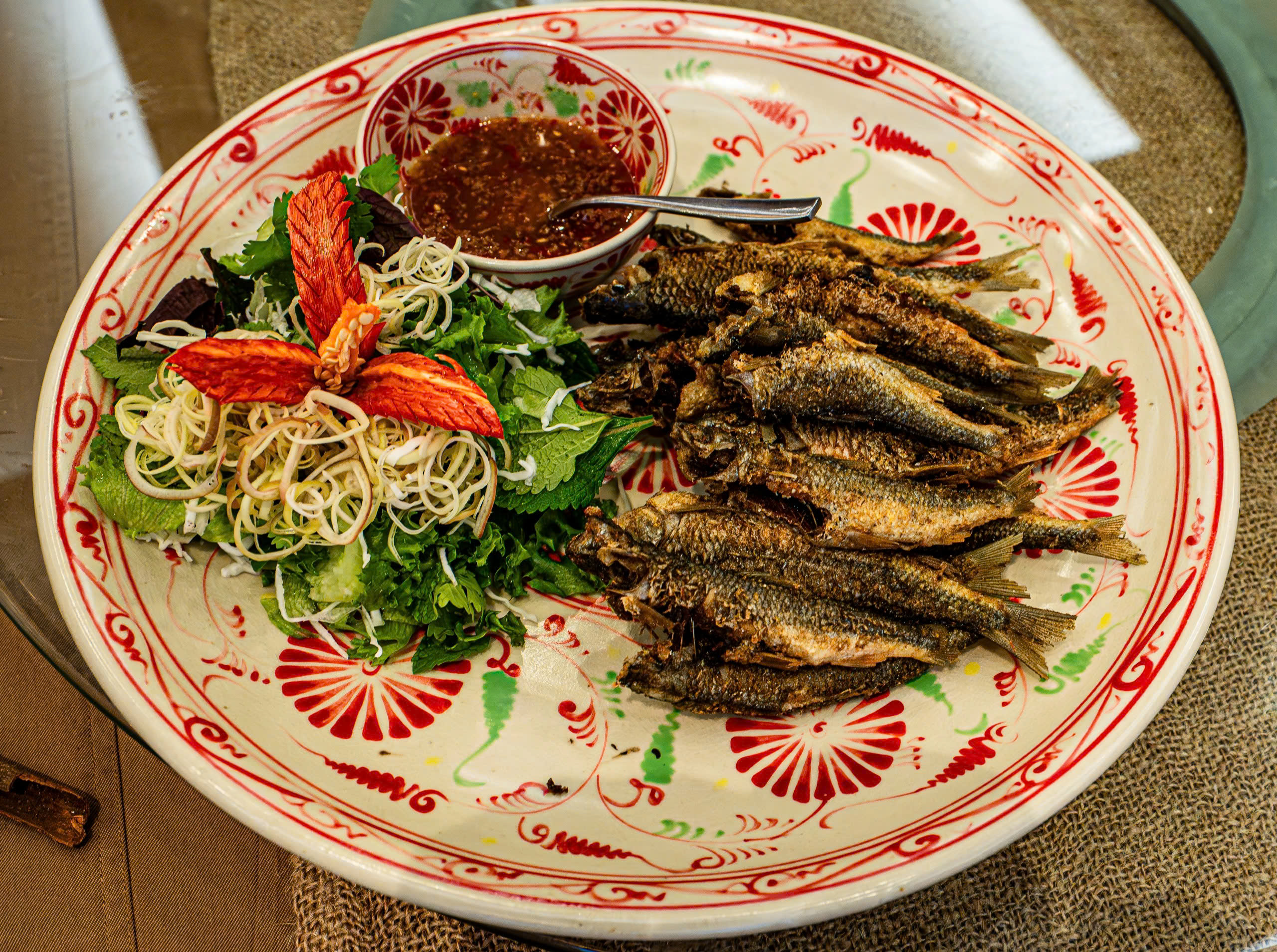
Crispy niên fish with spicy and sour seafood sauce. Photo: Organizing Committee
Today, these culinary cultural values are gradually being recognized as a heritage that needs to be preserved and spread. The rustic dishes of the mountains and forests are no longer just present in the small kitchens of the villages, but have entered the modern culinary space with a new, more refined and aesthetically pleasing appearance, while still retaining their traditional soul.
Bamboo-tube rice placed on a rustic wooden tray, golden grilled chicken infused with the scent of forest leaves, crispy stream fish served with indigenous herbs… all create a culinary picture that is both familiar and artistic. These dishes are not only appealing in taste but also showcase the beauty of presentation culture, and the way mountain people respect nature and cherish every product of the mountains and forests.
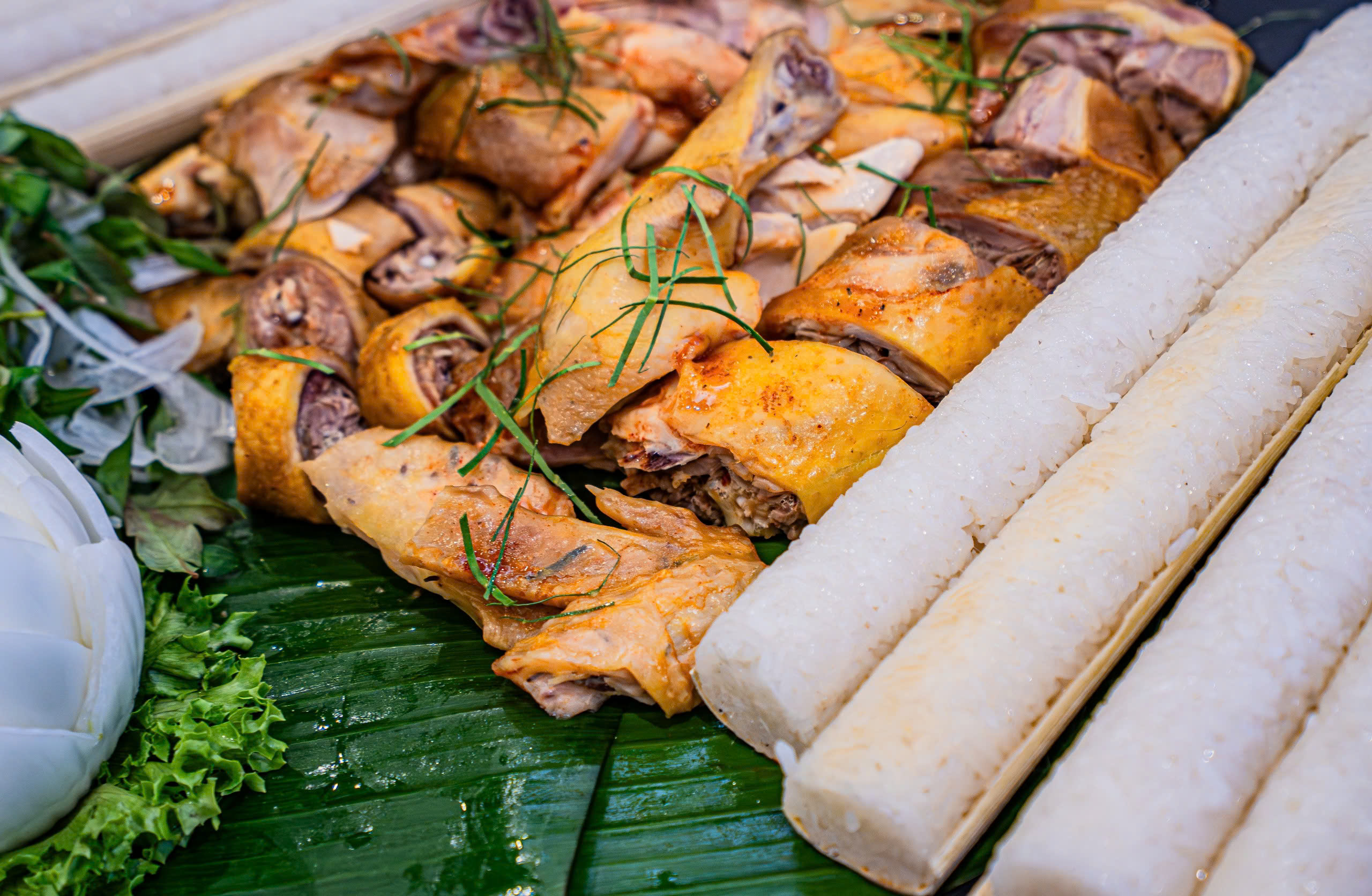
Steamed chicken with fish sauce and cơm lam. Photo: Organizing Committee
The special thing is that each dish not only represents cooking techniques but also carries a story about the people, customs, and identity of the land where it originated. Through each flavor, diners can feel the rhythm of village life, the warmth of the hearth, and the sincerity of the people living amidst the vast wilderness.
Cuisine, therefore, is not just a taste experience, but also a journey of cultural discovery. And in each dish bearing the flavor of the mountains and forests, a part of the soul of the vast wilderness is still being preserved, continued, and spread in its own unique way.
-67c69a726c4cb11c0334e52d8c276805_watermarked.jpg&w=3840&q=75)