In Trà Leng, weaving does not happen in a workshop. It happens on the veranda, under the stilt house, in the late afternoons once the fieldwork is done. A woman sits with her legs stretched out, one end of the loom tied to a house post, the other looped around her back. The whole warp is held taut by the weight of the weaver's own body — and perhaps no image says more about the relationship between a person and their craft here.
A loom tied to the back
The traditional highland backstrap loom is very simple: a few wooden bars, a strap, no pedals and no gears. All the tension in the threads depends on the weaver's posture and the pull of her back. Lean forward slightly and the threads slacken; lean back and they tighten. That is why the evenness of a finished cloth is such an honest record of the skill and endurance of the person who made it.
It is also why the craft cannot be hurried. A narrow piece may take several weeks. A large one with dense patterning can stretch over months, worked on in snatches between days in the fields. Weavers do not count their labour by the hour, and that is probably why holding a genuine piece of brocade feels so different from holding machine-woven cloth.
Colours taken from the forest
Before industrial yarn and dyes, every colour in a piece of brocade came from the plants around the village. Bark, leaves, roots and forest fruit were pounded, boiled and steeped to yield indigo, earth brown, russet and turmeric yellow. Cotton thread was hand-spun and dyed repeatedly until the colour sank deep into the fibre.
Natural colours are not as vivid as chemical dyes, but they have depth and they age beautifully. Today most yarn is bought ready-made for convenience and colourfastness, yet many older artisans keep the old dyeing methods for pieces used in ritual — something no market cloth can replace.
What the patterns say
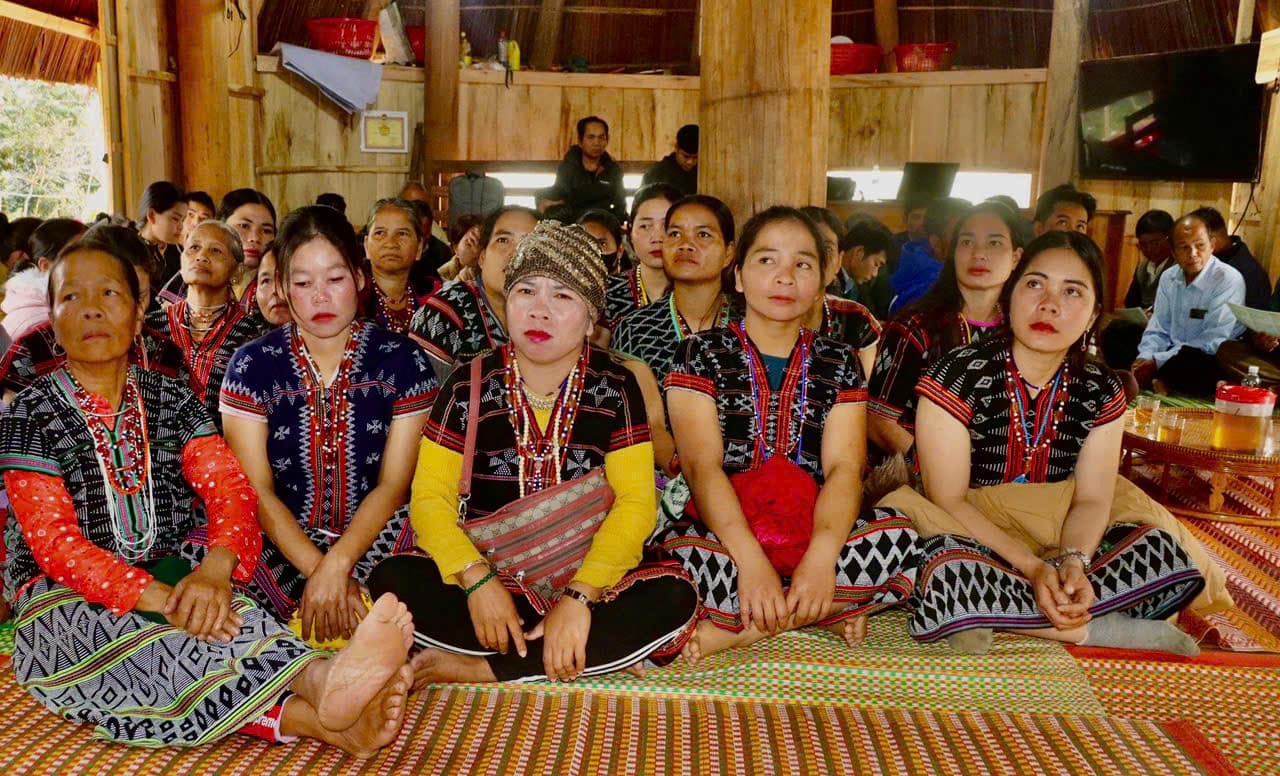
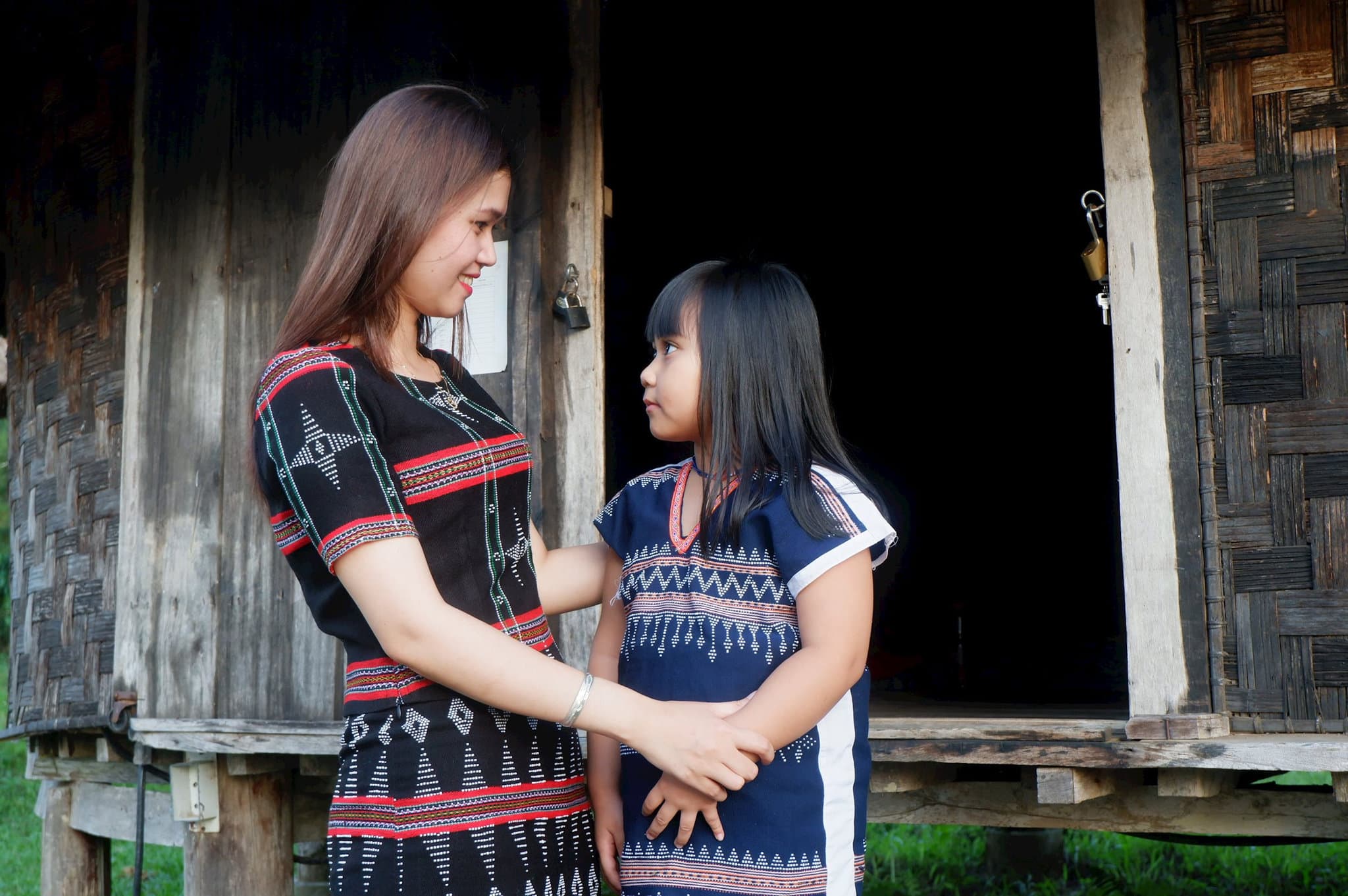
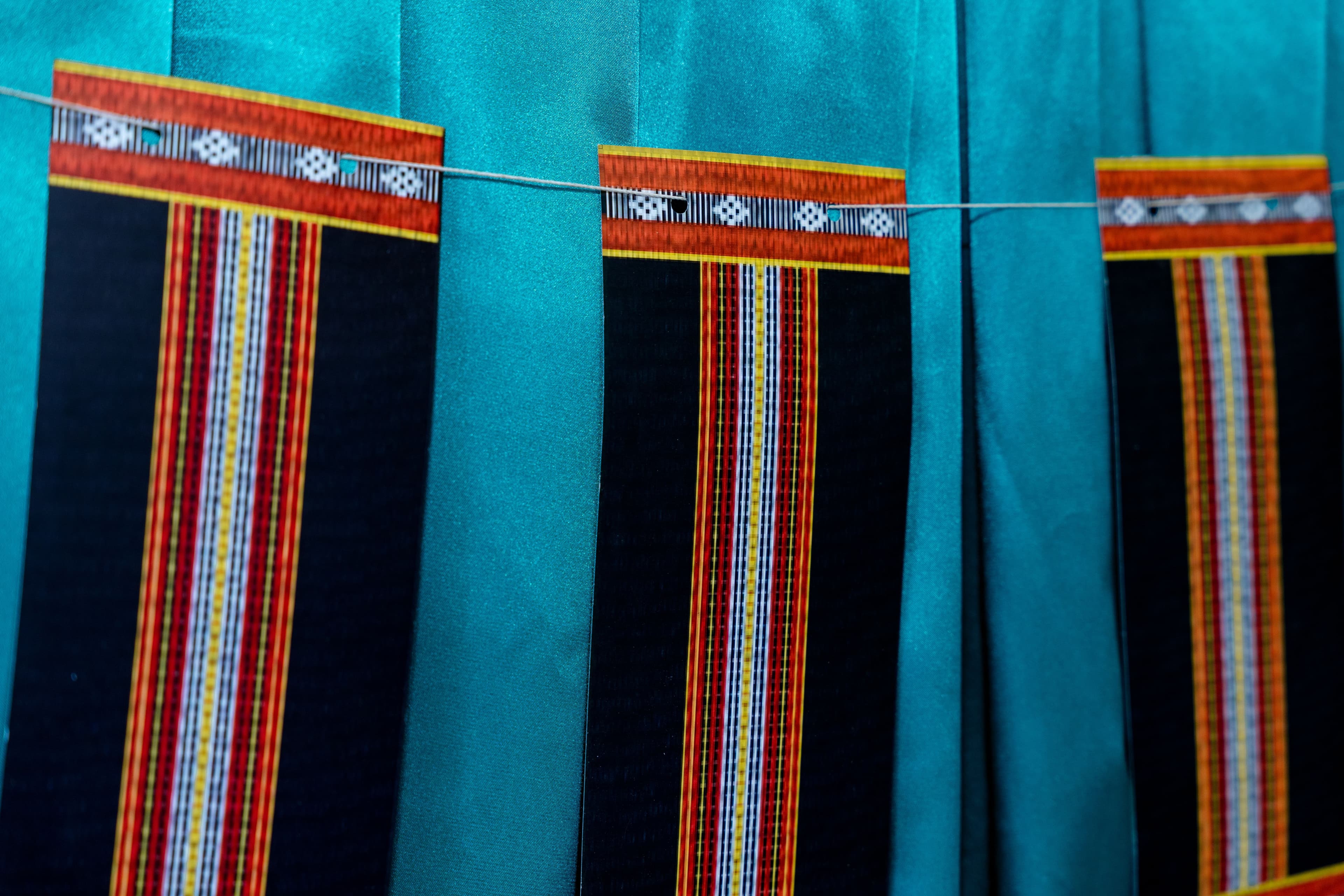
The motifs on brocade are not random decoration. They form a repeating geometric system drawn largely from what the weaver sees every day: the shape of the mountains, the line of a stream, grains of rice, the eyes of a tree, animal tracks, figures holding hands in a dance. Each area and each lineage has its own familiar motifs, and people in the village can tell where a cloth comes from just by looking.
What makes this remarkable is that none of it is written down on paper. The patterns live in the memory and in the hands of the weaver, passed from mother to daughter over decades of sitting side by side at the loom. Each time an elderly artisan dies before passing hers on, a few motifs may disappear with her.
The cloth in a human life
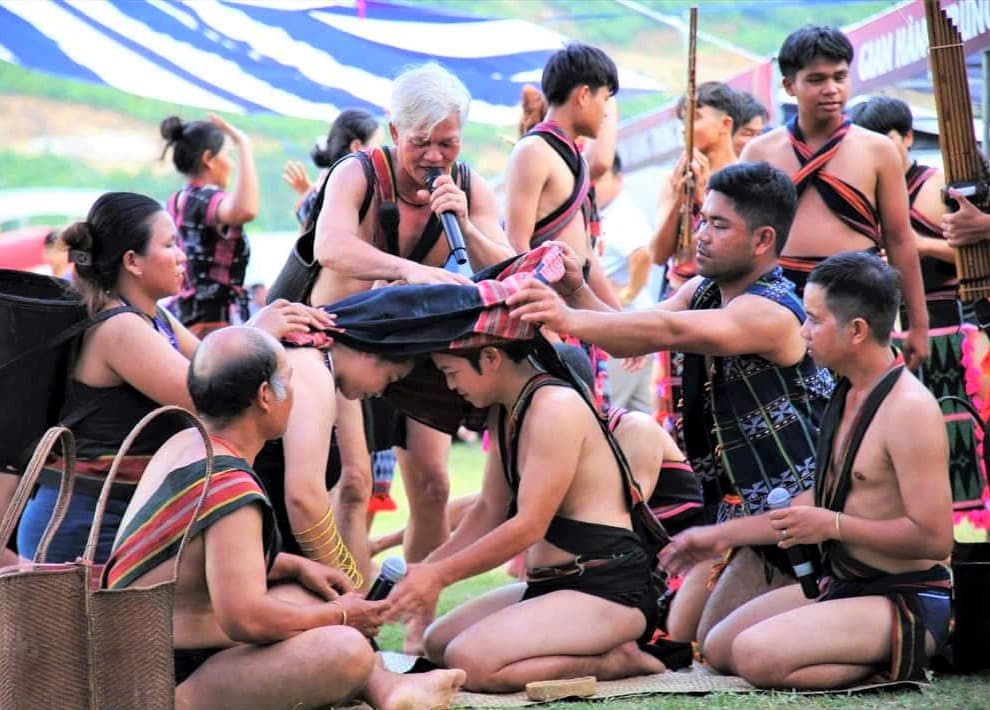
In the highlands brocade is more than clothing. It appears at the most important moments of a life: the carrying cloth for a newborn, the dress worn by a bride, the cloth given between two families sealing a bond, the covering used at a funeral. Giving someone a hand-woven piece is a high form of respect — because the gift is measured in the giver's time.
Keeping the craft alive today
Weaving in Trà Leng faces the familiar dilemma of every handicraft: young people leave to work far away, hours at the loom cannot compete with the income from other jobs, and the market is full of cheap machine-woven cloth sold as brocade.
The workable way forward is not to freeze the craft but to let it move: putting traditional motifs onto goods that buyers today actually use — scarves, bags, purses, cushion covers, decorative pieces — while tying weaving to community tourism, so that visitors do more than buy a cloth; they sit, watch, try their hand and understand why it costs what it does.
For buyers, the most practical way to support it is very simple: buy directly from the weavers or from cooperative groups in the commune, and accept that handmade work costs more and that no two pieces are alike. That imperfection is the trace of a human hand — the one thing machines cannot fake.