
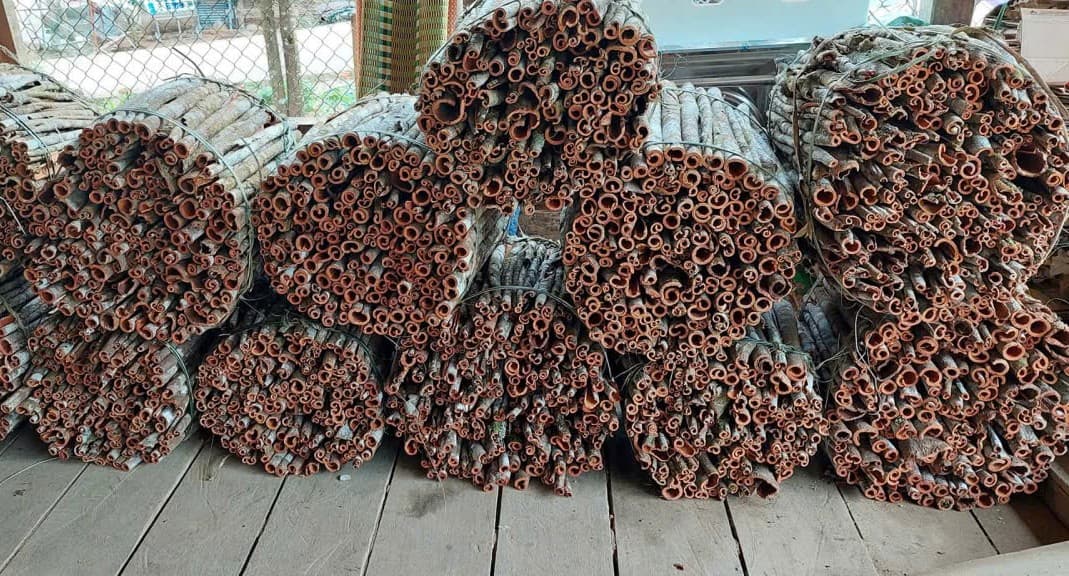
Buying good cinnamon is easy. Keeping it good after six months in the kitchen is another matter. The value of Trà Leng cinnamon lies in its high essential oil content — and that oil is the first thing to evaporate if you store it badly. This article is about very everyday questions: which form to buy, how to use it, where to keep it.
Three common forms of cinnamon
Cinnamon usually reaches the buyer in three forms, each serving a different purpose.
Quills (cinnamon sticks): bark rolled and dried. These hold their aroma the longest and suit stews, broths and hot drinks. Choose this form if you use cinnamon slowly.
Ground cinnamon: convenient for baking, coffee, milk and marinades. But powder has a large surface area exposed to air, so it fades fast — buy only enough for a few months.
Cinnamon essential oil: a concentrated extract used for diffusing, scented candles and floor cleaners. It is not a cooking spice and is not for direct consumption.
How to spot good cinnamon
You need no special equipment, only your eyes, your nose and a little patience while choosing.
Smell: held close, good cinnamon gives a sweet, warm aroma with a light peppery finish at the back of the nose. Faint or fleeting fragrance usually means old bark or bark whose oil has been partly extracted.
Bark: thick, firmly rolled, dark brown on the inside. Cinnamon grown at altitude grows slowly, so the bark tends to be thicker and denser.
Taste: bite a small piece; good cinnamon gives a clear warm heat that lingers.
Ground cinnamon: a natural brown colour, not as fine as flour, and free of lumps — lumps mean it has absorbed moisture.
Using cinnamon in Vietnamese cooking
Cinnamon belongs in dishes that take time. In a pot of phở, beef stew or caramelised pork, a small quill lightly toasted over the flame before it goes into the pot gives far more depth than one dropped straight in.
The most important rule is: use less. Trà Leng cinnamon is rich in oil, so the amount you are used to with ordinary cinnamon can easily be too much here. For a broth serving four to six people, one small quill about the length of a finger joint is usually enough. Any more and the dish turns bitter and drowns out the other flavours.
In drinks, cinnamon pairs beautifully with coffee, hot milk, ginger tea and mulled fruit drinks in cold weather. A pinch of ground cinnamon over the morning coffee, or a quill dropped into the teapot — simple and effective.
Beyond the kitchen
In Trà Leng almost the whole cinnamon tree is put to use. Besides bark for cooking, households and local workshops make cinnamon incense, scented candles, balms, essential oils, even cinnamon-scented floor cleaner. Wood left after harvesting is carved into handicrafts.
One note on cinnamon essential oil: it is a concentrated product and can irritate skin if applied directly. Use it only for diffusing or dilute it exactly as the manufacturer instructs. Pregnant women, young children and people with underlying conditions should consult a qualified health professional before regular use.
Storage: the four enemies of cinnamon aroma
Cinnamon oil evaporates under the influence of four things: air, light, heat and moisture. Storing it well is really just a matter of avoiding all four.
Keep it in a glass jar or an airtight container, not in an opened plastic bag.
Store it somewhere dry and dark, away from the stove and direct sunlight — many people keep spice jars right next to the cooker, which is the worst spot of all.
Do not refrigerate it: moisture condensing every time you open the lid will leave the cinnamon damp and prone to mould.
Prefer buying quills and grinding them as needed rather than buying a large bag of powder.
Stored properly, quills keep their aroma well for about two to three years, while ground cinnamon is best used within six months to a year. The simplest test is still your nose: when a piece no longer releases its scent as you snap it, its best part is gone.
The Ca Dong say that the longer cinnamon lives in mountain mist, the more fragrant it becomes. That holds for the trees in the forest, and it also hints at how to treat the cinnamon in your kitchen: slowly, kept covered, away from sun and wind.